Jesus the Roman vs Y’hoshua the Jew: How the Messiah Was Rebranded. (PART 1)
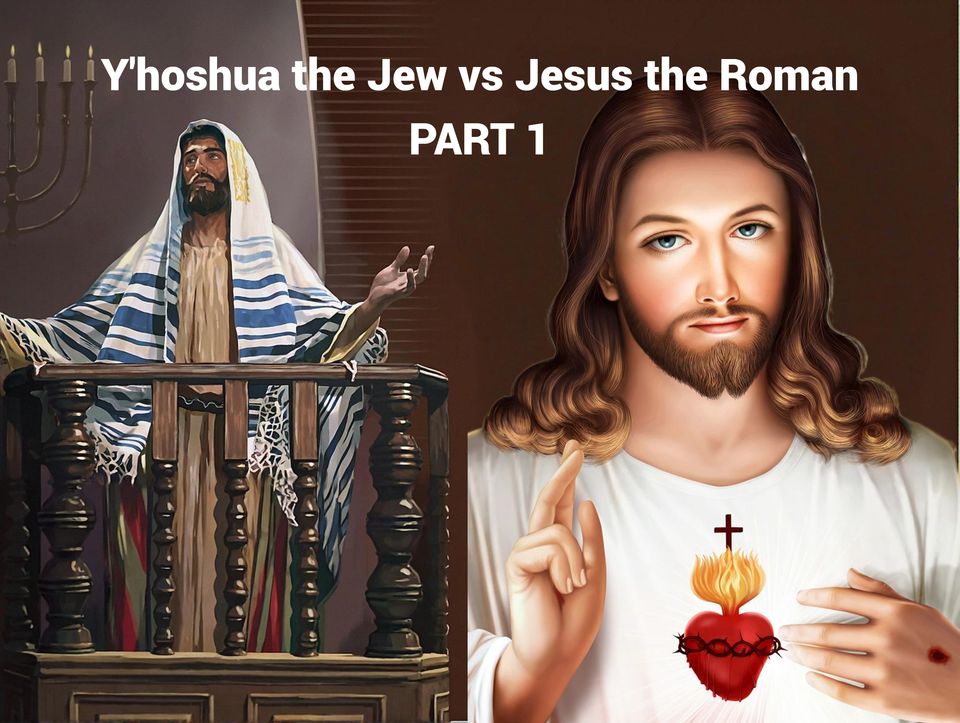
From Covenant Rabbi to Imperial Icon
Two portraits — and only one matches Scripture
There’s a version of “Jesus” that feels like a Roman religious mascot: detached from TORAH, detached from Yisrael, detached from Y'hovah's moedim, detached from Shabbat, and often packaged with an empire-friendly “new religion,” filled with religious duties, idle worship, and traditions of men.
Then there’s Y’hoshua the Jew: covenant-born, TORAH-honoring, synagogue-attending, Shabbat-faithful, proclaiming the Malchut (Kingdom) of Elohim—and calling talmidim to walk as He walked.
And by this we know that we know Him, if we guard His commands. The one who says, “I know Him,” and does not guard His commands, is a liar, and the truth is not in him. But whoever guards His Word, truly the love of Elohim has been perfected in him. By this we know that we are in Him. The one who says he stays in Him ought himself also to walk, even as He walked.
Yocḥanan Aleph (1 John) 2:3-6 (CJB)
And yes… Rome would definitely prefer the first one. (Empires love “religion,” because religion can be domesticated. Discipleship can’t.)
This article reveals the greatest identity swap in Jewish emunah and history.
The Messiah entered the world as a Torah-born Jew (not a Roman invention)
Scripture goes out of its way to show that Y’hoshua’s life begins inside the TORAH covenant, not outside of it.
“On the eighth day, when it was time for his b’rit-milah, he was given the name Yeshua, which is what the angel had called him before his conception.”
Luqa [Luke] 2:21 (CJB)
This is not “anti-Torah Messiah,” with the law nailed to the cross. This is a TORAH-compliant Messiah, with a mother and father who loved the commandments of Avinu.
Y’hoshua’s own testimony: He did not abolish Torah
One of the most “rebranded” areas is Torah itself—so we go straight to the King Messiah.
“Don’t think that I have come to abolish the Torah or the Prophets. I have come not to abolish but to complete. Yes indeed! I tell you that until heaven and earth pass away, not so much as a yud or a stroke will pass from the Torah — not until everything that must happen has happened. So whoever disobeys the least of these mitzvot and teaches others to do so will be called the least in the Kingdom of Heaven. But whoever obeys them and so teaches will be called great in the Kingdom of Heaven.”
Mattityahu [Matthew] 5:17–19 (CJB)
A Romanized religious system can tolerate human inspiration and man's tradition. It struggles with obedience to the Word. Because it has been shaped by Rome, the Empire, councils, and power.
Those modern churches that continue to follow the Romanized religious system's doctrines become daughters of the harlot. Including those that follow the Sunday tradition.
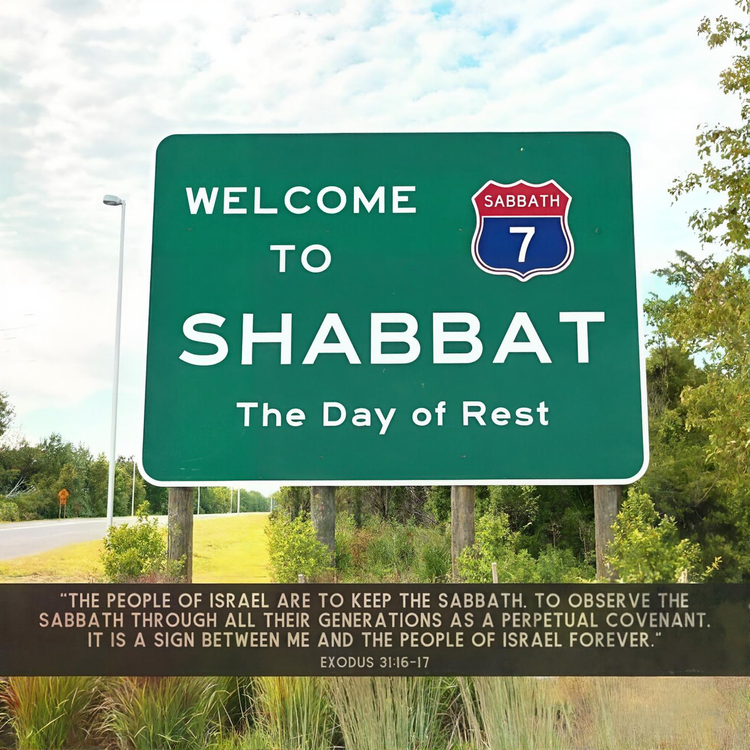
Y’hoshua was Shabbat-faithful — and claimed authority over it, not against it
Shabbat is the covenant heartbeat. Watch how the Brit HaDashah presents Y’hoshua:
“Now when he went to Natzeret, where he had been brought up, on Shabbat he went to the synagogue as usual. He stood up to read,”
Luqa [Luke] 4:16 (CJB)
And His famous declaration:
“Then he said to them, ‘Shabbat was made for mankind, not mankind for Shabbat; So the Son of Man is Lord even of Shabbat.’”
Marqos [Mark] 2:27–28 (CJB)
That is not “Shabbat is canceled” and has become a Sunday tradition. That is “Shabbat is restored to its purpose—and the King Messiah has authority to correct abusive traditions.”
The Tanakh itself anchors Shabbat as creation-rooted covenant instruction
“Remember the sabbath day, to keep it holy… For in six days the LORD made heaven and earth… and rested the seventh day; wherefore the LORD blessed the sabbath day, and hallowed it.”
Shemoth [Exodus] 20:8–11 (JPS 1917)
A Roman-friendly Christianity often treats Shabbat like a Jewish relic.
But Tanakh treats it like a creation marker, covenant signpost, and the fourth commandment.
“Salvation is from the Jews” — and that is not an insult, it’s a map
“You people don’t know what you are worshipping; we worship what we do know, because salvation comes from the Jews.”
Yochanan [John] 4:22 (CJB)
This single sentence destroys the “Rome invented everything” myth.
It also destroys the “Gentiles, the Church, replace Israel” delusion.
It means: if you want the Messiah correctly, you must honor the covenant context that produced Him.
Language shifts helped—then culture shifts hijacked
Historically, the Messiah's name moved through languages (Hebrew/Aramaic → Greek → Latin → English). That part is normal language transmission. Britannica and Oxford both trace “Jesus” through Greek Iēsous and Latin Iesus, related to Hebrew forms like Yehoshua/Yeshua.
But here’s the danger: when language shifts are paired with empire power, names don’t just translate—they get repackaged, traditions come about, and the Word gets added to.
The empire problem: When Rome adopted “Christianity,” it reshaped it, separating it from its Hebrew roots.
Once the faith movement entered imperial sponsorship and control, it began to drift into imperial forms.
- Constantine issued a civil decree in 321 connected to making Sunday a legal day of rest.
- Later, imperial influence pushed separation from Jewish reckoning of Passover/Pascha; historical sources record Constantine urging a unified practice and harshly framing separation from Jewish customs.
- Britannica summarizes the Nicaea-era push toward uniformity regarding Easter and the calendar.
After the death of the original apostles and a moving away of the Roman Church from it's jewish roots, “Jesus the Roman” is born—not because the real Messiah changed, but because institutional religion re-authored the story to fit the goals of the empire.
“Jesus the Roman”
Key characteristics often taught:
- Detached from Torah
- Founder of a new religion
- Replaced Yisrael
- Sunday-centered faith
- Grace without obedience
- Greek philosophical framing
- Obedience reframed as “legalism”
- Rome needed a universalized Messiah. "Hence, universal church."
- Jewish context was stripped to avoid rebellion
- Obedient discipleship was replaced with institutional allegiance
He became a Messiah removed from His Jewish identity vs. the Messiah revealed in TORAH, covenant, and living in obedience to Y’hovah.
A crucial clarification (so we stay Torah-true and honest)
This series is not saying:
- “Gentiles can’t follow Mashiach.”
- “All churches are Rome.”
- “Anyone using the name ‘Jesus’ is automatically wrong.”
This series is saying:
- The Messiah must be understood in His covenant identity and history as revealed in the Word, or we will follow a distorted and false portrait.
- The pattern of the Roman Empire has often been: remove Torah, remove Shabbat, remove His moedim, remove Yisrael, replace discipleship and relationship with religion.
Bridge to Part 2: How do we “un-rebrand” back to the real Messiah?
In the next part of our series, Part 2, we will answer:
- What does it look like to return to the “ancient paths” without pride?
- How do we restore Shabbat, TORAH (His Instructions), and Yisrael-rooted faith as discipleship, not as “identity theater”?
- What is the difference between “religion” and talmidut?
By Rabbi Francisco Arbas
📧 franciscoarbas.yisrael@gmail.com
Following His ‘WAY’ — Netzari Mashiach Judaism
Comments ()