Reading in Context: A Discipleship Safeguard Against Error
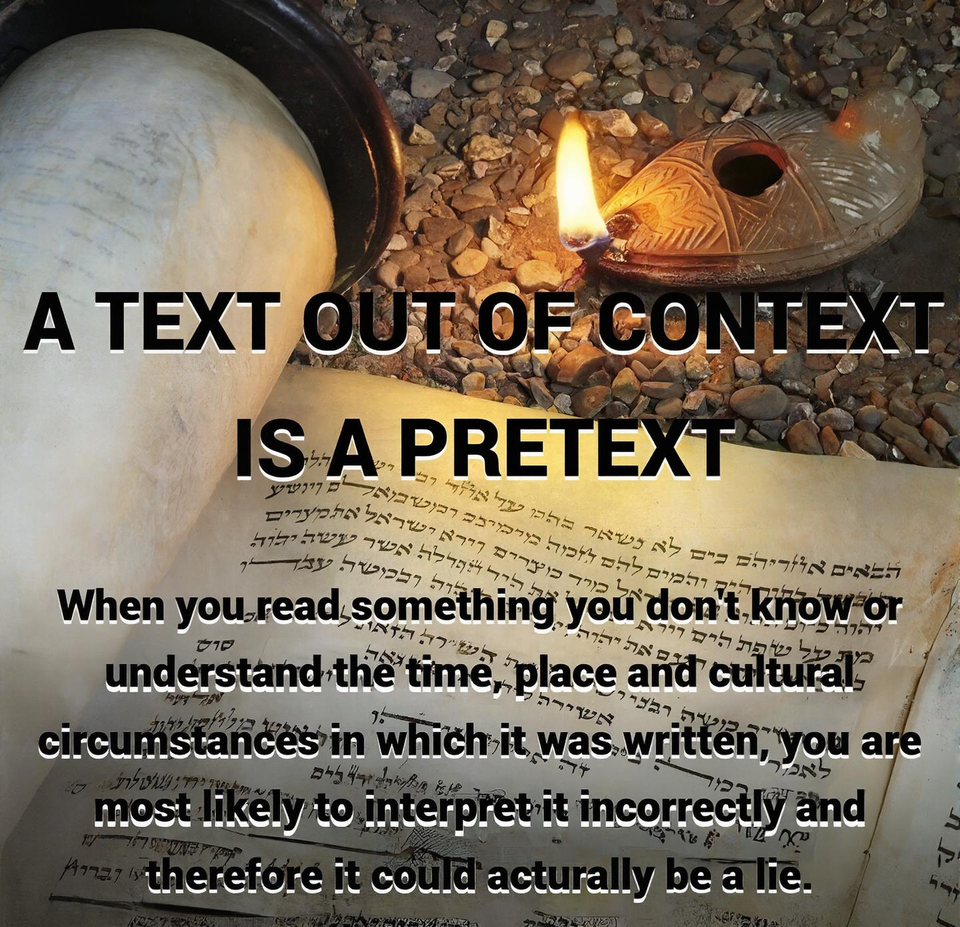
When a Clip Lies, Context Tells the Truth
We see it in the news all the time, especially nowadays: a politician is quoted as saying something incorrect or offensive; a video captures something blatantly racist or unjust. But only later do we find out that what was reported was only part of the story. When we learn more about what was said or what happened—both immediately before and after what seemed so offensive or unjust—it often turns out that those short clips were taken out of context. Then, once we see everything in context—with all the surrounding facts and information—it completely changes our understanding… or at least it should.
That’s not just a “media problem.” It’s a human problem.
Whenever we arrive in the middle of something—a conversation, a conflict, a story—we’re missing context: the words, motives, history, and circumstances that come before and after what we’re witnessing. Everything we do, see, hear, and say has a context. And when we ignore or don’t know that context, nearly everything can be misconstrued—especially when we interpret through predetermined biases, assumptions, or agendas.
Let’s be honest: the flesh loves a good “gotcha.” Context ruins our drama, and the ego hates that.
Why Context Matters Even More With Scripture
Consider the Bible: a wholly unique collection of writings—given through many authors across many generations, in cultures far removed from ours. Even with the limited information we have on the human writers, the Scriptures themselves remind us that we are not the original audience of every passage.
So when we impose modern ideas, cultural assumptions, and emotional reactions onto an ancient text—then demand that Scripture submit to our worldview—we have instantly taken the Word out of context.
And the price of that is always the same: we don’t end up with the meaning; we end up with our meaning.
In Netzari Mashiach Judaism, we also affirm something foundational: For us, TORAH refers to all of Scripture—Tanakh and Brit HaDashah—as Y’hovah’s instructions and revelation. That means “context” is not just a few surrounding verses. Context ultimately includes the entire counsel of Elohim.
The Bible Is Unified—So Truth Must Harmonize
Despite its diversity, Scripture is amazingly unified. And because we believe the Scriptures are the finalized, written communication of Elohim to mankind, the parts must be understood in harmony—never in contradiction.
If these were forty independent, uninspired writers, disagreements wouldn’t matter. But as Scripture, the whole is a unified testimony. Therefore:
- A verse must agree with its paragraph.
- A paragraph must agree with its chapter.
- A chapter must agree with its book.
- A book must agree with all Scripture.
- And all Scripture must agree with the revealed character of Y’hovah.
When interpretation produces contradictions, one of two things is happening: We misunderstood the passage, or we imported an assumption that doesn’t belong there.
Scripture: Near Context and Far Context
The more immediate context for anything we read comes from the text closest in proximity. Each book provides context for each chapter; each chapter provides context for each verse. No single verse—or phrase or word—exists in a vacuum. It must be considered alongside the surrounding sentences and paragraphs, as well as:
- the author’s frame of reference
- who the author was
- when and why he wrote
- the covenant setting
- the audience and their situation
- and everything else Scripture says on that subject
Context isn’t optional. It’s the difference between learning truth and manufacturing doctrine.
A Key Warning: Don’t Answer Before You Hear
Scripture itself warns us about reacting too quickly—about forming conclusions before we have the full picture.
“He that answereth a matter before he heareth it, it is folly and shame unto him.”
Mishlei [Proverbs] 18:13 (JPS 1917)
That verse applies to conversations, conflicts, accusations… and Bible interpretation.
Many doctrinal disasters begin the same way:
- read one verse
- feel something
- assume the meaning
- build a theology
- defend it emotionally
- refuse correction
A fool takes no pleasure in trying to understand; he only wants to express his own opinion.
Mishlei [Proverbs] 18:2 (CJB)
Context is how we humble ourselves enough to actually hear.
Prooftexting: The Fastest Way to Get Scripture Wrong
A text without a context is a pretext for a proof text.” Anyone can quote a Bible verse, out of context, and make a case for a particular view or doctrine. This is known as “proof texting”.
It can look spiritual—especially if you quote confidently. But it’s spiritually dangerous because it trains us to use Scripture as a tool to win arguments instead of a voice that transforms our lives.
Context protects us from:
- superficial, self-oriented readings
- doctrine built on fragments
- modern bias projected onto ancient truth
- selective reading that avoids conviction
- emotional interpretations that bypass obedience
And discipleship is never built on fragments. Discipleship is built on faithful hearing that produces faithful living.
The Berean Discipleship Pattern
The Scriptures praise those who test teachings against the Word—carefully, diligently, humbly.
“Now these were more noble than those in Thessalonica, in that they received the Word with all readiness, and searched the Scriptures daily, whether these matters were so.”
Ma‘asei [Acts] 17:11 (TS2009)
Notice what they did:
- received the Word (not hostile, not cynical)
- searched the Scriptures (not opinions, not trends)
- daily (discipleship is a lifestyle)
- to verify truth (not to protect ego)
That’s context-driven discipleship.
Context Leads to Obedience, Not Information Only
Context isn’t merely academic; it’s transformational. When we read in context, the Ruach corrects us—not just informs us.
“Be doers of the Word, and not hearers only, deceiving yourselves.”
Ya‘aqob [James] 1:22 (TS2009)
Out-of-context reading often produces:
- confident talk with little fruit
- doctrine without holiness
- identity without obedience
But context-based reading produces:
- conviction
- repentance (teshuvah)
- alignment
- endurance
- fruit that matches the Word
That’s the path of talmidut.
A Practical Method: How to Read Any Passage in Context
Here’s a simple, repeatable approach (simple doesn’t mean lazy—just faithful):
1) Read the whole “thought,” not just a verse
Read the paragraph. Then the section. Then the chapter.
2) Identify the speaker and audience
Who is speaking? To whom? What is the cultural setting? Under what covenant setting? What issue is being addressed?
3) Ask: What problem is this passage solving?
Scripture is often responding to real situations—rebellion, suffering, deception, correction, and endurance.
4) Watch for “therefore,” “because,” “so that,” “for”
Those words are context-bridges. If we ignore them, we break the meaning.
5) Compare with the rest of TORAH (all Scripture)
If an interpretation contradicts the larger witness of Scripture, it needs to be re-examined.
6) Let the plain meaning speak first
Don’t chase mystical interpretations to avoid obedience. Many people run to “deep” meanings because the plain meaning would require change.
7) Apply it like a talmid (disciple)
Ask:
- What does this reveal about Y’hovah our God?
- What does this correct in me?
- What obedience does this call for today?
A Discipleship Guardrail: Sound Handling of the Word
Scripture commands careful handling—especially for those who teach.
“Do your utmost to present yourself approved to Elohim, a worker who does not need to be ashamed, rightly handling the Word of truth.”
Timotiyos Bĕt [2 Timothy] 2:15 (TS2009)
“Rightly handling” requires context. Otherwise, we become workers who should be ashamed—because we end up teaching ourselves and believing our own made-up doctrines instead of teaching and obeying the Word.
Do all you can to present yourself to God as someone worthy of his approval, as a worker with no need to be ashamed, because he deals straightforwardly with the Word of the Truth.
Timotiyos Bĕt [2 Timothy] 2:15 (Complete Jewish Bible),
The Bible Is Simple, But Not Casual
The Bible is simple to understand—not necessarily easy, and not without effort, but simple. Yet it’s not a theological textbook with ideas laid out systematically for fast consumption. That makes it easy to misunderstand if we’re lazy with context.
Often, it is sufficient to read a little before and after a verse to grasp the meaning. But sometimes it requires more work—because Scripture is layered, spiritual, covenantal, and interconnected. That’s why there’s no substitute for being familiar with all of Torah (all Scripture)—reading and re-reading it like your life depends on it…
…because it does.
Whom shall one teach knowledge? And whom shall one make to understand the message? Them that are weaned from the milk, them that are drawn from the breasts? For it is precept by precept, precept by precept, line by line, line by line; here a little, there a little.
Yeshayahu (Isaiah) 28:9-10. (JPS 1917)
As we reflect on Isaiah 28:10, we can understand that this verse is highlighting the nature of divine instruction. The phrase “precept must be upon precept” signifies that God’s teachings are built layer by layer. It shows us that learning from God’s Word is not merely about absorbing isolated verses but understanding the entire context as a cohesive whole. Each instruction is meant to build upon another, akin to how a solid structure is built brick by brick.
Final Encouragement: Context Is Humility in Action
Just as context is crucial to understanding life, it is equally essential for comprehending Elohim’s Word. In fact, we cannot fully understand Scripture without it.
Context is not a “scholar thing.” It’s a discipleship thing.
And every time we slow down, read carefully, study, and let Scripture interpret Scripture, we are practicing the humility that discipleship requires.
“The fear of YHVH is the beginning of knowledge; But the foolish despise wisdom and discipline.”
Mishlei [Proverbs] 1:7 (JPS 1917)
May Y’hovah make us the kind of talmidim who don’t chase clips, trends, or fragments—but who love the truth enough to read, test, and obey in context.
By Rabbi Francisco Arbas
📧 franciscoarbas.yisrael@gmail.com
Following His ‘WAY’ — Netzari Mashiach Judaism

Comments ()