Understanding the Need for God
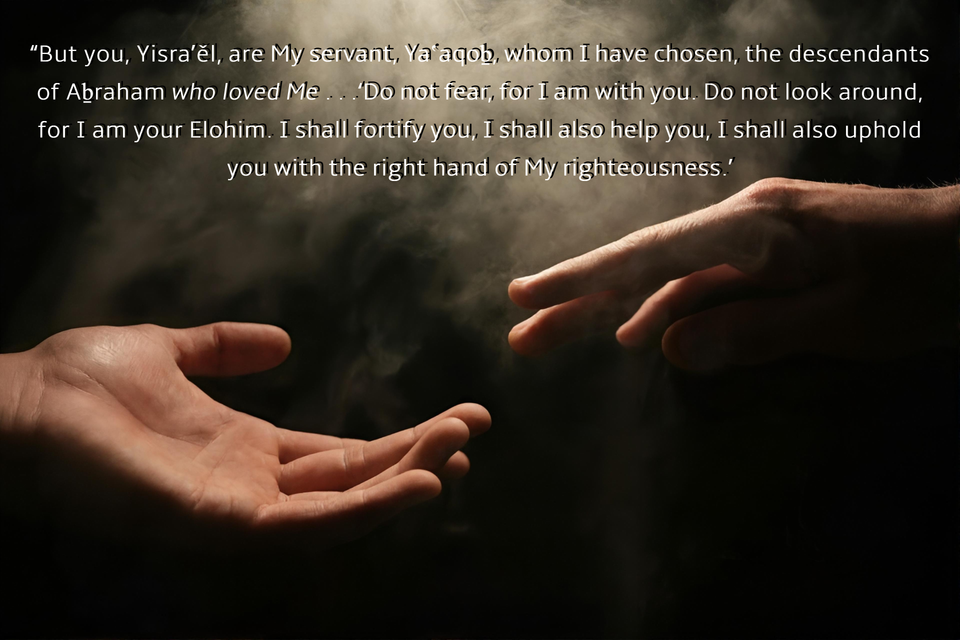
The Role of the Messiah, Human Limitations, and Y’hovah’s Restoring Promises
The Need for God Starts With Creation
TORAH begins: Y’hovah is Creator of the universe, bringing order from chaos. Humans are created in His image—meaning we were designed for relationship, dependence, and purpose from the beginning. This is essential to recognizing the need for God in our lives.
“And God said: ‘Let us make man in our image, after our likeness; and let them have dominion over the fish of the sea, and over the fowl of the air, and over the cattle, and over all the earth, and over every creeping thing that creepeth upon the earth.’
And God created man in His own image, in the image of God created He him; male and female created He them.”
Berĕshith [Genesis] 1:26–27 (JPS 1917)
When a created being tries to live independently from the Creator, everything goes sideways (that’s not just theology… it’s also basic on “how-to-not-break-your-life”).
Human Limitations: Sin Separates, and We Cannot Repair Ourselves
In Netzari Mashiach Judaism, we do not minimize human responsibility—but we also do not pretend human effort can erase guilt, heal the heart, or restore communion with Y’hovah Avinu Elohei. Scripture tells us plainly what happened: separation. Not because Y’hovah is weak—but because we became crooked and missed the mark.
“Behold, the LORD’S hand is not shortened, that it cannot save,
Neither His ear heavy, that it cannot hear;
But your iniquities have separated
Between you and your God,
And your sins have hid His face from you,
That He will not hear.”
Yeshayahu [Isaiah] 59:1–2 (JPS 1917)
And the heart-level reality is not merely “I made mistakes.” It’s deeper: something in us needs renewal.
“Create me a clean heart, O God;
And renew a stedfast spirit within me.
Cast me not away from Thy presence;
And take not Thy holy spirit from me.
Restore unto me the joy of Thy salvation;
And let a willing spirit uphold me.”
Tehillim [Psalms] 51:12–14 (JPS 1917)
The Messiah: Y’hovah’s Appointed Champion for Redemption and Restoration
The Mashiach is not a human “upgrade plan.” He is Y’hovah’s intervention—His solution to what humanity cannot solve.
The Tanakh doesn’t merely promise comfort; it speaks of healing through His suffering, and restoration through atonement:
“But he was wounded because of our transgressions,
He was crushed because of our iniquities:
The chastisement of our welfare was upon him,
And with his stripes we were healed.
All we like sheep did go astray,
We turned every one to his own way;”
Yeshayahu [Isaiah] 53:5–6 (JPS 1917)
In Netzari terms: Our Rabbi Y’hoshua HaMashiach restores what Adam and Chavah (Eve) shattered—bringing us healing, forgiveness, and alignment back to Avinu Elohei (Our Father God).
Y’hovah’s Promises: The Renewed Covenant Writes TORAH on the Heart
Here is a cornerstone of Netzari discipleship theology: the goal is not “religion” (man-made belief system and regulated rituals), but restoration into faithful covenant living—with TORAH internalized, written in the heart, not canceled.
Notice the Renewed Covenant is with the house of Yisrael, and with the house of Judah. There is no Church mentioned! Read Romans 11. It is the Gentiles that are grafted into Yisrael; the Church hasn't replaced or become Yisrael.
“Behold, the days come, saith the LORD, that I will make a new covenant with the house of Israel, and with the house of Judah;
not according to the covenant that I made with their fathers in the day that I took them by the hand to bring them out of the land of Egypt; forasmuch as they broke My covenant, although I was a lord over them, saith the LORD.
But this is the covenant that I will make with the house of Israel after those days, saith the LORD, I will put My law in their inward parts, and in their heart will I write it; and I will be their God, and they shall be My people;
and they shall teach no more every man his neighbour, and every man his brother, saying: ‘Know the LORD’; for they shall all know Me, from the least of them unto the greatest of them, saith the LORD; for I will forgive their iniquity, and their sin will I remember no more.”
Yirmeyahu [Jeremiah] 31:31–34 (JPS 1917)
And the Tanakh also describes how this internal transformation happens—by Y’hovah giving a new heart and placing His Spirit within His people:
“A new heart also will I give you, and a new spirit will I put within you; and I will take away the stony heart out of your flesh, and I will give you a heart of flesh.
And I will put My spirit within you, and cause you to walk in My statutes, and ye shall keep Mine ordinances, and do them.”
Yehezqĕl [Ezekiel] 36:26–27 (JPS 1917)
This is why we say TORAH is all Scripture (Not just the 1st 5 books): the story is unified—promise, fulfillment, and Spirit-empowerment leading to obedience.
The Brit HaDashah Confirms the Same Need: We Cannot Save Ourselves
The Brit HaDashah (New Covenant) does not contradict the Tanakh (Hebrew Bible)—it clarifies the same truth: all fall short, and redemption is accomplished by the Mashiach/Messiah.
“since all have sinned and come short of earning God’s praise.
By God’s grace, without earning it, all are granted the status of being considered righteous before him, through the act redeeming us from our enslavement to sin that was accomplished by the Messiah Yeshua.”
Romiyim [Romans] 3:23–24 (CJB)
And the life of a talmid is not powerless self-effort. It’s union with the Messiah:
“I am the vine and you are the branches. Those who stay united with me, and I with them, are the ones who bear much fruit; because apart from me you can’t do a thing.”
Yochanan [John] 15:5 (CJB)
Even “grace” is not permission to stay the same—it is power to walk out the life Y’hovah prepared:
“For you have been delivered by grace through trusting, and even this is not your accomplishment but God’s gift.
You were not delivered by your own actions; therefore no one should boast.
For we are of God’s making, created in union with the Messiah Yeshua for a life of good actions already prepared by God for us to do.”
Efesiyim [Ephesians] 2:8–10 (CJB)
What This Means for Discipleship
So why do we need Y’hovah God?
- Because we were created for Him (identity and purpose).
- Because sin separates, and we cannot undo it by our willpower.
- Because the Mashiach is Y’hovah’s appointed Redeemer and Restorer.
- Because the Renewed Covenant is heart-level transformation—TORAH written within, by the Spirit.
A Netzari call to action (practical talmidut):
- Teshuvah (turn fully, no excuses).
- Emunah (trust that produces obedience).
- Abide in the Messiah (daily dependence, not weekend religion).
- Walk in Spirit-empowered TORAH (bearing the fruit of a renewed heart).
You will recognize them by their fruit.
This phrase means you can identify people by their actions or the results of their behavior, much like a tree is known by the type of fruit it produces. It emphasizes the importance of evaluating someone's character based on their deeds.
Conclusion: The Need for God Is the Beginning of Shalom
Netzari Judaism is not about winning arguments, man-made theology, or about making a new religion—it’s about restoration. It's about keeping TORAH (All Scripture) as the standard for our worldview. Humanity cannot manufacture righteousness, peace, or healing. But Y’hovah has promised, provided, and is completing our restoration through our Rabbi Y’hoshua Ben (Son of) Y'hovah—writing His instruction on the heart and producing shalom in a people who live as true talmidim (disciples). We are Yisra’ěl!
For in Messiah יהושׁע neither circumcision nor uncircumcision has any strength [circumcision of the flesh], but a renewed creature (circumcision of the heart). And as many as walk according to this rule, peace and compassion be upon them, and upon the Yisra’ěl of Elohim.
Galatiyim (Galatians) 6:15-16 (TS2009)
By Rabbi Francisco Arbas
📧 franciscoarbas.yisrael@gmail.com
Following His ‘WAY’ — Netzari Mashiach Judaism

Comments ()