Y’hoshua the Jew vs Jesus the Roman: How the Messiah Was Rebranded (PART 2)
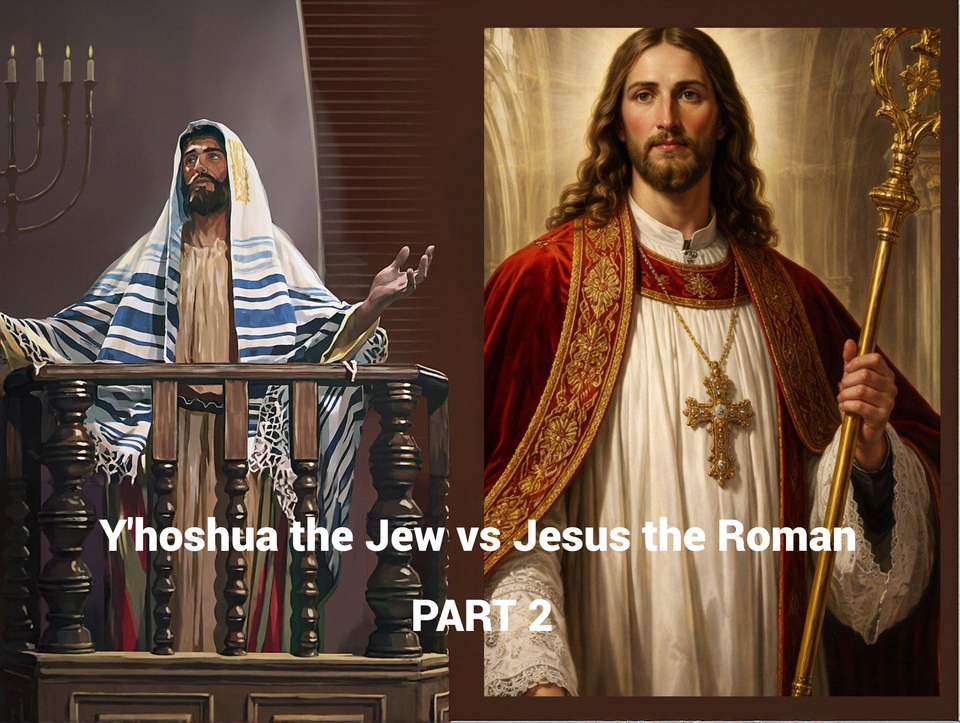
From Religion Back to the Way of Covenant Discipleship
The “old paths” are not nostalgia — they are obedience
“Thus saith the LORD: Stand ye in the ways and see, And ask for the old paths, Where is the good way, and walk therein, And ye shall find rest for your souls. But they said: 'We will not walk therein.'”
Yirmeyahu [Jeremiah] 6:16 (JPS 1917)
Notice: the issue wasn’t a lack of information. It was a refusal to walk.
 Rabbi Francisco Arbas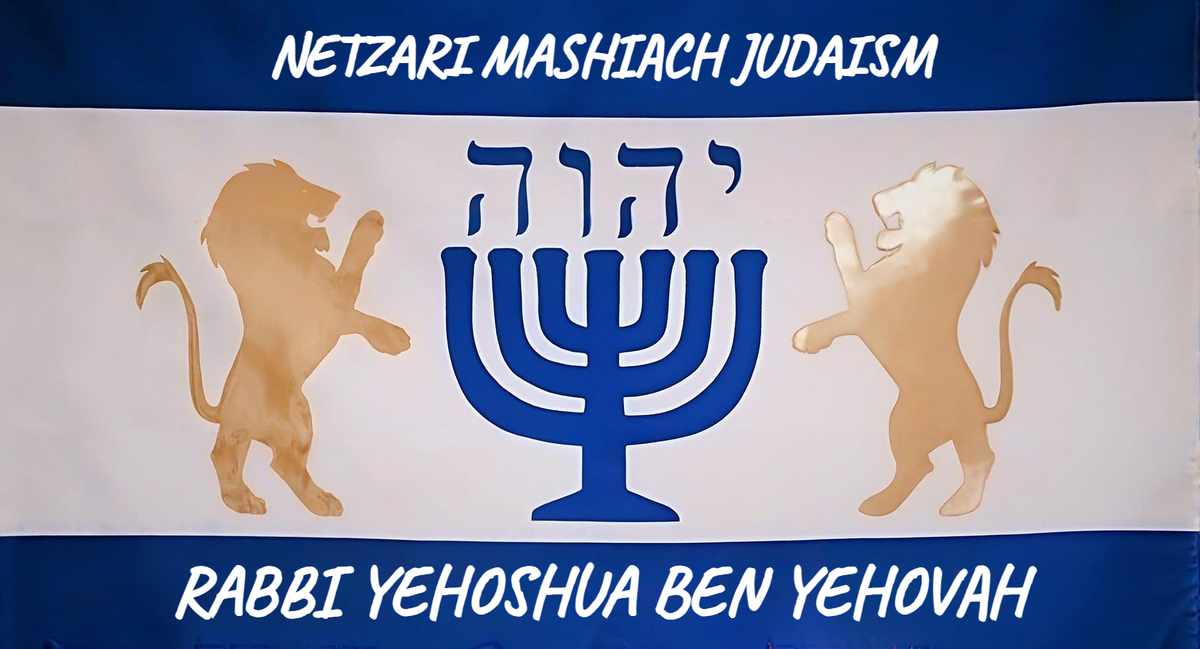
Shabbat remains — and Hebrews says so plainly
“So there remains a Shabbat-keeping for God’s people. For the one who has entered God’s rest has also rested from his own works, as God did from his. Therefore, let us do our best to enter that rest; so that no one will fall short because of the same kind of disobedience.”
Ivrim [Hebrews] 4:9–11 (CJB)
That’s not “Shabbat was replaced.” That’s “Shabbat remains—and disobedience blocks rest.”
The phrase "no rest for the wicked" is derived from Isaiah 57:21, which states, "There is no peace," says the LORD, "for the wicked." This scripture emphasizes that those who engage in wickedness will not find true peace or rest in their lives.
 Rabbi Francisco Arbas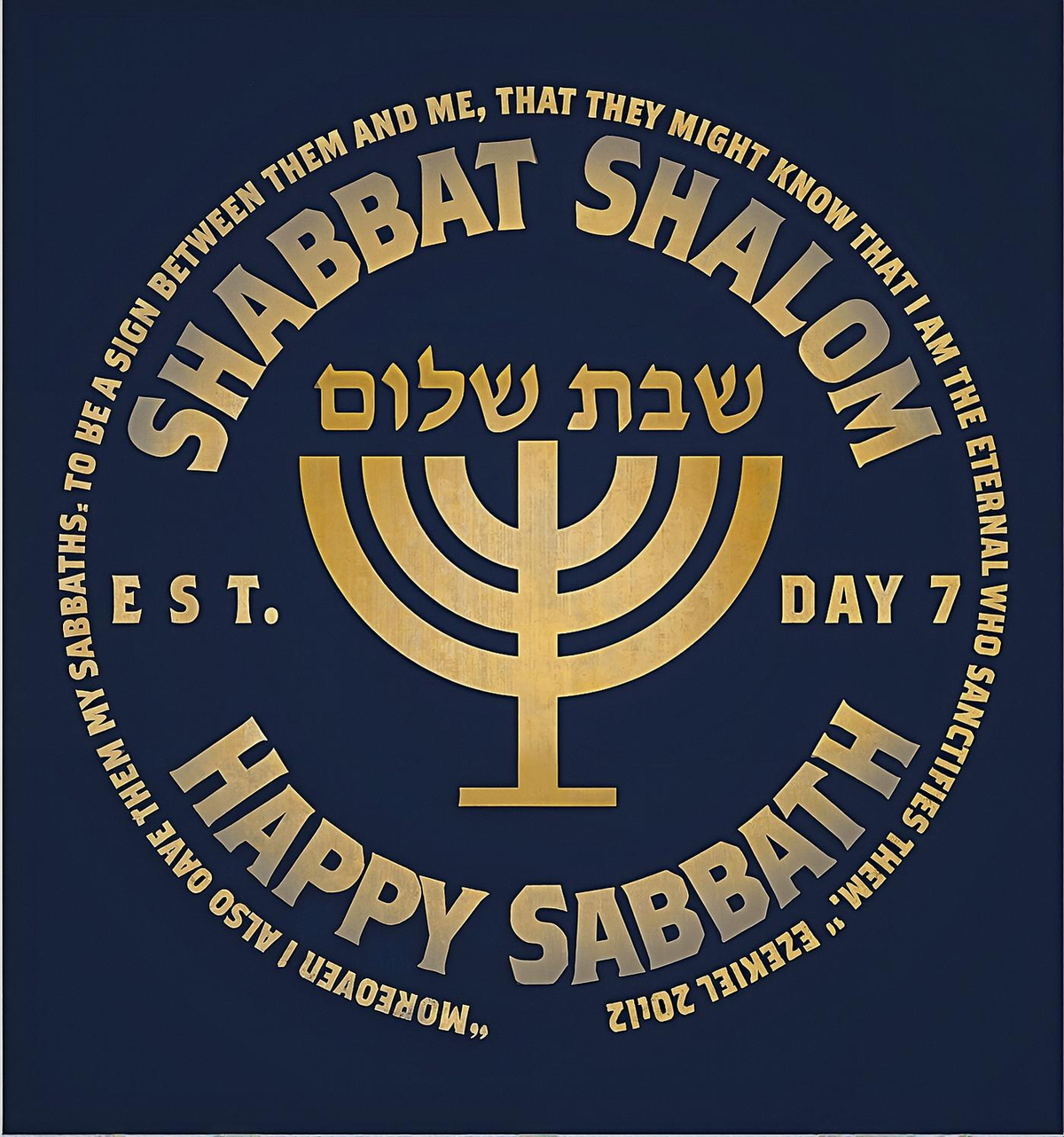
The book of Revelation defines the end-time talmidim the same way
“Here is the endurance of the set-apart ones, here are those guarding the commands of Elohim and the belief of יהושע.”
Ḥazon [Revelation] 14:12 (TS2009)
This is Netzari discipleship in one verse:
- guarding the commands of Elohim
- the belief of יהושע (faith that obeys, faith that follows our Messiah Y'hoshua).
The emissaries (apostles) never portrayed Torah as “abolished”
Acts shows thousands of Jewish believers who were still Torah-zealous:
“On hearing it, they praised God; but they also said to him, ‘You see, brother, how many tens of thousands of believers there are among the Judeans, and they are all zealots for the Torah.’”
Ma’asei [Acts] 21:20 (CJB)
And the Jerusalem council assumes Gentiles will hear Moshe read every Shabbat:
“For from the earliest times, Moshe has had in every city those who proclaim him, with his words being read in the synagogues every Shabbat.”
Ma’asei [Acts] 15:21 (CJB)
So the “Romanized” narrative that says Torah was immediately dumped simply doesn’t match the text.
 Rabbi Francisco Arbas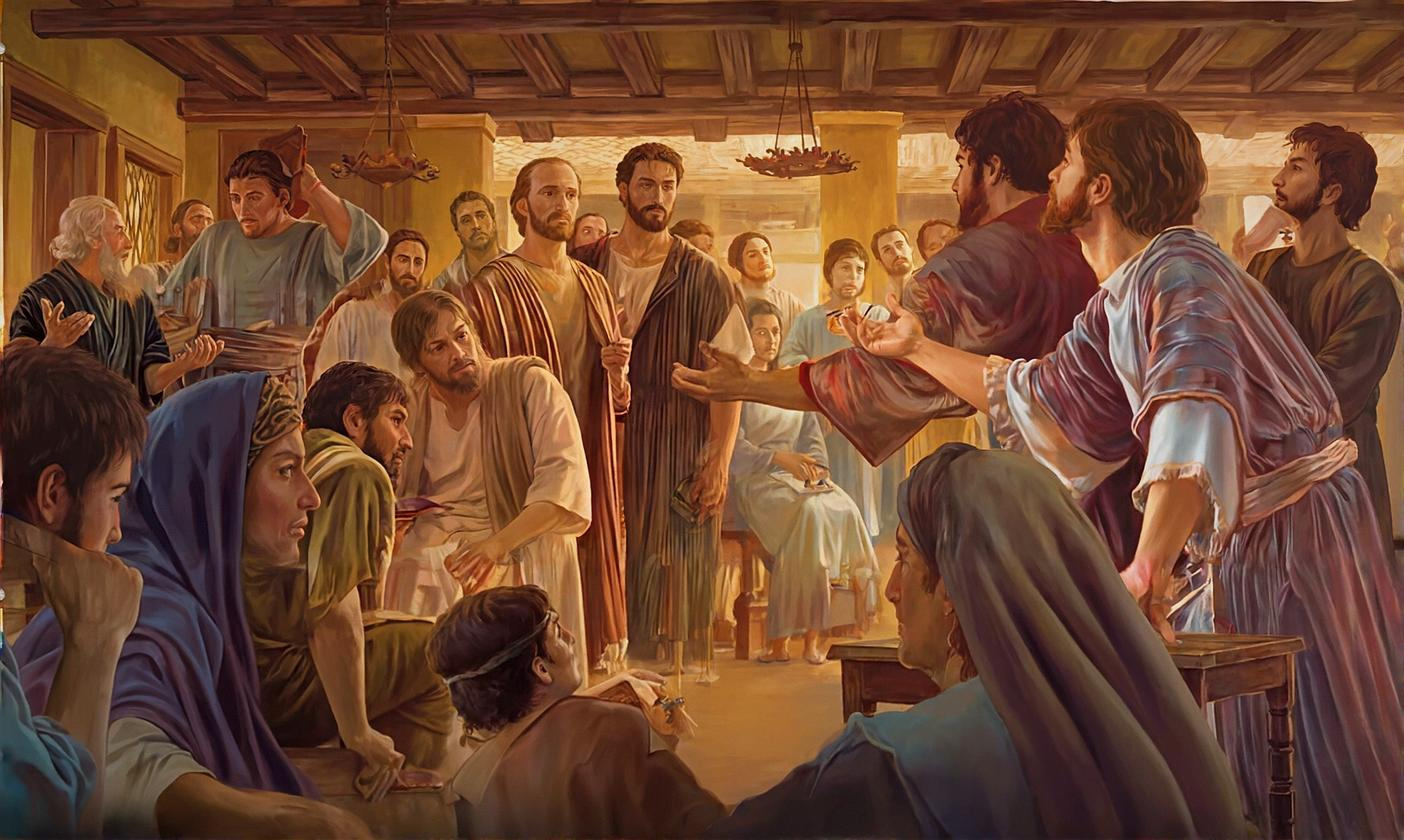
Gentiles were never meant to boast over Yisrael — we were grafted in
“Now if the hallah offered as firstfruits is holy, so is the whole loaf. And if the root is holy, so are the branches. But if some of the branches were broken off, and you — a wild olive — were grafted in among them and have become equal sharers in the rich root of the olive tree, then don’t boast as if you were better than the branches! However, if you do boast, remember that you are not supporting the root, the root is supporting you.”
Romim [Romans] 11:16–18 (CJB)
“Jesus the Roman” or the Church often boasts (even unknowingly) by treating Israel as obsolete.
But Sha’ul says: the root (Yisrael) supports you.
 Rabbi Francisco Arbas
How do we know we truly know Him: we walk like He walked
“My children… The way we can be sure we know him is if we are obeying his commands… A person who claims to be continuing in union with him ought to conduct his life the way he did.”
1 Yochanan [1 John] 2:3–6 (CJB)
That’s the death of “easy-believism.” (I said a sinner's prayer). And it’s also the death of “Torahless Messiah.”
The restoration posture: humility, not superiority
Part of rebranding is psychological, or a change of thinking: religion becomes a badge, my piety (I'm complete in my religious duty and traditions).
Netzari (Nazarene) restoration must be different:
- We return to TORAH as Y’hovah’s instruction (all Scripture) Berĕshith (Genesis) through Ḥazon (Revelation).
- We are born into the Kingdom or bornagain - through Teshuvah, Tevilah, receiving Ruach HaKodesh. Yochanan 3:3, Acts 2:38
- We bear fruit of the Ruach through discipleship.
- We honor Y'hovah's Moedim (Appointed times) out of love for the master.
- We return to Shabbat as a gift and sign.
- We honor Yisrael as the covenant root that carried the oracles of Elohim.
Most of all, we reject Roman Christianity's prideful mechanism (replacement and contempt).
Practical “un-rebranding” steps for talmidim
Here is a discipleship pathway that avoids both extremes (Torahless religion and prideful identity performance):
A) Re-anchor in the Messiah’s covenant identity
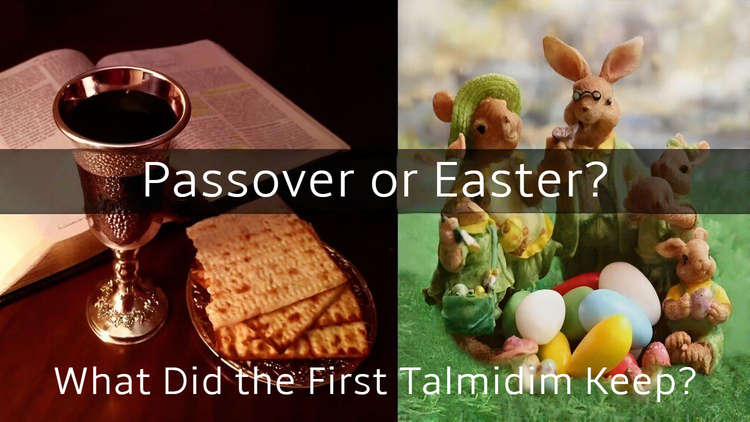
While they were eating, Yeshua took a piece of matzah, made the b’rakhah, broke it, gave it to the talmidim and said, “Take! Eat! This is my body!” Also he took a cup of wine, made the b’rakhah, and gave it to them, saying, “All of you, drink from it! For this is my blood, which ratifies the New Covenant, my blood shed on behalf of many, so that they may have their sins forgiven.
Mattityahu [Matthew] 26:26–28 (CJB)
“Don’t think that I have come to abolish the Torah or the Prophets…”
Mattityahu [Matthew] 5:17–19 (CJB)
B) Rebuild Shabbat as delight and discipline
“If you hold back your foot on Shabbat from pursuing your own interests on my holy day; if you call Shabbat a delight, ADONAI’s holy day, worth honoring; then honor it by not doing your usual things or pursuing your interests or speaking about them.
Yeshayahu (Isaiah) 58:13
“Shabbat was made for mankind…”
Marqos [Mark] 2:27–28 (CJB)
C) Sit under Moshe regularly (Acts 15:21 model)
“For from the earliest times, Moshe has had in every city…”
Ma’asei [Acts] 15:21 (CJB)
Moshe received the Torah from Sinai and transmitted it to Yehoshua son of Nun, and Yehoshua to the Elders, and the Elders to the Prophets, and the Prophets transmitted it to the Men of the Great Assembly. They said three things: Be deliberate in judgment, raise up many disciples, and make a fence for the Torah.
D) Reject boasting; embrace the root
“Don’t boast… the root is supporting you.”
Romim [Romans] 11:16–18 (CJB)
In this case, the "root" of the olive tree is Abraham and the Abrahamic covenant through which Yisrael and the Gentiles will be blessed. Yisrael is the Olive Tree, with Abraham - the father of the faith - as the root.
Throughout the Old Testament, a metaphor is used of Yisrael as an Olive Tree.
In Isaiah 11, Jesse (David's father) is described as a "stump" out of which a "shoot" will arise, who will eventually be called the Mashiach (Messiah):
A shoot (חֹ֖טֶר) will come up from the stump of Jesse; from his roots, a Branch (וְנֵ֖צֶר) (netzer) will bear fruit.
They must be connected to the root - Abraham and his covenant - in order to partake of the blessings. This is the Jewish connection; there is no Roman connection here! Salvation is of the Jews!
You people don’t know what you are worshipping; we worship what we do know, because salvation comes from the Jews.
Yochanan (John) 4:22 (CJB)
E) Measure faith by obedience and imitation
“A person who claims… ought to conduct his life the way he did.”
1 Yochanan [1 John] 2:3–6 (CJB)
Faith in an emunah context is often measured by one's obedience to YHVH's/God's commands and the imitation of the Messiah's example. This reflects a deeper understanding of faith as not just belief, but as a commitment to live according to spiritual principles and values.
The end goal: restoration through discipleship, not a new “brand”
Rome’s tool is rebranding.
Y’hovah’s way is teshuvah and refining.
This is why Netzari Mashiach Judaism isn’t trying to create a cool label, brand name, or new religion. We’re trying to produce talmidim (disciples) who actually follow the Master, our Rabbi Y'hoshua ben Y'hovah.
And yes, following the Rabbi… It’s harder than joining a club. But following the WAY is alive and a life more abundant.
Closing charge: Choose the real Mashiach over the convenient Christ!
The “Roman Jesus” is often comfortable with a believer who:
- attends services one or two times a week,
- been in this religious persuasion all my life,
- holds on to church leadership opinions and doctrines,
- argues for church theology and has some form of godliness,
- sin as a lifestyle and lacks the power of an overcoming life,
- but doesn’t walk in discipleship or faithfulness to the Word.
Y’hoshua the Jew calls for talmidim/disciples who:
- love Y’hovah Avinu Elohei (YHVH our Father God),
“Sh’ma, Yisra’el! ADONAI Eloheinu, ADONAI echad [Hear, Isra’el! ADONAI our God, ADONAI is one]; and you are to love ADONAI your God with all your heart, all your being and all your resources. These words, which I am ordering you today, are to be on your heart.
Deḇarim (Deuteronomy) 6:4-5 (CJB)
- guard His commands,
How happy are those whose way of life is blameless, who live by the Torah of ADONAI! How happy are those who observe his instruction, who seek him wholeheartedly! They do nothing wrong but live by his ways. You laid down your precepts for us to observe with care. May my ways be steady in observing your laws. Then I will not be put to shame, since I will have fixed my sight on all your mitzvot. I thank you with a sincere heart as I learn your righteous rulings. I will observe your laws; don’t completely abandon me!
Tehillim (Psalms) 119:1-8 (Complete Jewish Bible) CJB
- endure,
And may God, the source of encouragement and patience, give you the same attitude among yourselves as the Messiah Yeshua had, so that with one accord and with one voice you may glorify the God and Father of our Lord Yeshua the Messiah.
Romiyim (Romans) 15:5 (CJB)
- and walk out His (the Mashiach) faithful example in today's world.
Daily! Walk as He walked. Here is the endurance. . .
This is when perseverance is needed on the part of God’s people, those who observe his commands and exercise Yeshua’s faithfulness.
Ḥazon [Revelation] 14:12 (TS2009)
By Rabbi Francisco Arbas
📧 franciscoarbas.yisrael@gmail.com
Following His ‘WAY’ — Netzari Mashiach Judaism



Comments ()