YHVH in Tehillim (Psalms) 119 — יהוה: His TORAH
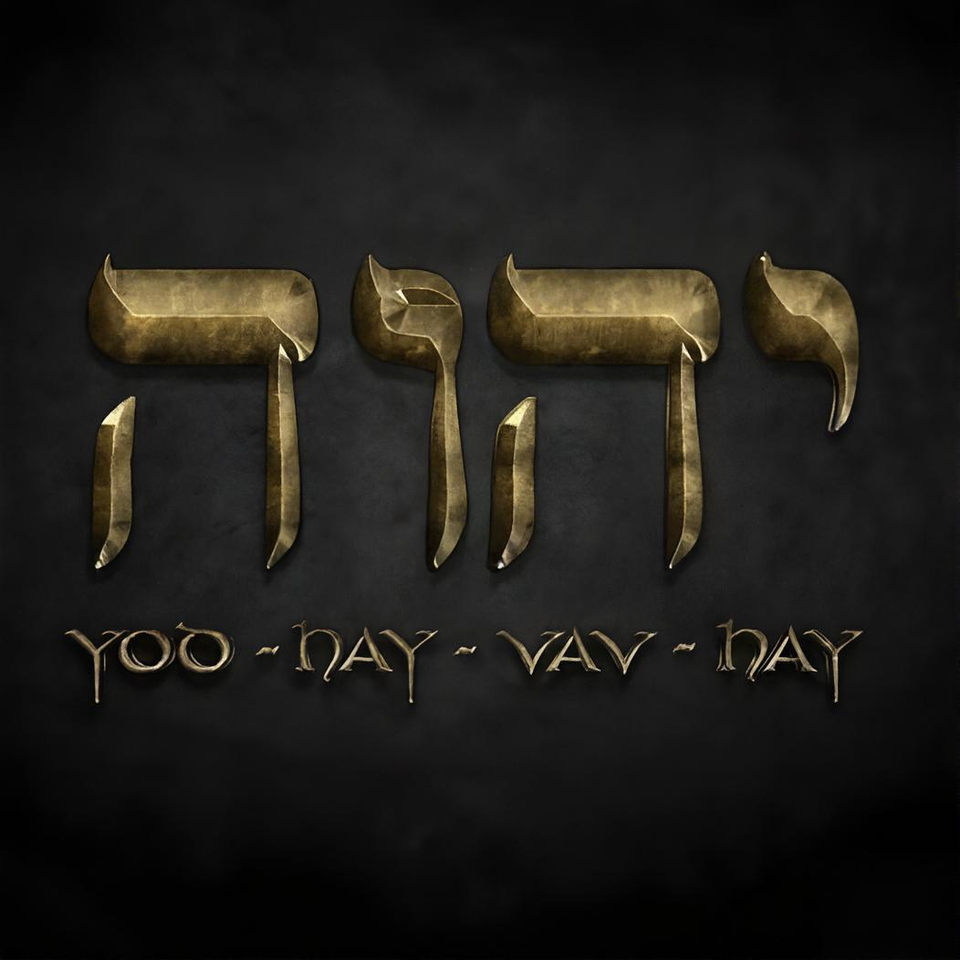
The TORAH of Y’hovah
Tehillim (Psalms) 119 is the longest chapter in the Scriptures and one of the most majestic declarations ever written concerning the TORAH, the Word, the commandments, the precepts, the statutes, the rulings, and the WAY of Y’hovah.
This great psalm is not merely a poem about our emunah. It is a holy meditation. It is the cry of a servant who loves the instruction of Y’hovah and understands that life is found in His Word. It teaches us that the TORAH of Y’hovah is not a burden to those who love Him. It is light, correction, wisdom, a delight, and it is the path of life.
As the longest acrostic in the Scriptures, Tehillim 119 consists of twenty-two stanzas, corresponding to the twenty-two letters of the Hebrew alef-bet. Each stanza contains eight verses, and each verse within that stanza begins with the same Hebrew letter.
This structure teaches us something powerful. From Alef to Tav, from beginning to end, the servant of Y’hovah is being shaped by His Word.
In this teaching, we will meditate on the four Hebrew letters of the Sacred Name:
Yud — י
Hay — ה
Vav — ו
Hay — ה
Together, these letters form:
YHVH — יהוה
This is the distinctive covenant Name of the Elohim of Yisrael. It is the Name by which Y’hovah revealed Himself as Creator, Deliverer, Redeemer, Lawgiver, Father, Judge, and King. The tetragrammaton — יהוה — is often counted as appearing 6,823 times in the Tanakh, though exact counts may vary slightly depending on manuscript tradition and edition.
But we must understand this clearly: the Name of Y’hovah is not a decoration. It is not a slogan. It is not something to be handled carelessly.
To know His Name is not merely to know letters or pronunciation. To know His Name is to know His character, authority, holiness, covenant faithfulness, mercy, righteousness, and His WAY.
And Tehillim 119 teaches us that those who love His Name must also love His Word.
TORAH Is His Instruction for Life
Many people hear the word “Torah” and think only of the “law” in a cold legal sense. But in Hebrew understanding, TORAH means instruction, teaching, direction, and guidance.
At Netzari Mashiach Judaism, we understand TORAH in its fullest biblical sense: the complete instruction of Y’hovah revealed through all Scripture — Tanakh and Brit HaDashah. The written Word of Y’hovah teaches us who He is, what He loves, what He hates, how He calls His people to live, and how His promises are fulfilled through our Rabbi Y’hoshua HaMashiach.
Throughout Tehillim 119, many words are used to describe the revelation of Y’hovah:
Torah — His instruction
Mitzvot — His commandments
Precepts — His appointed directions
Statutes / laws — His established decrees
Rulings / judgments — His righteous decisions
Word — His spoken and written revelation
WAY — His path of life
Testimonies — His covenant witness
These are not competing ideas. They are different expressions of one beautiful truth: Y’hovah speaks, and His servants are called to live by His Word.
A true talmid does not ask, “How little must I obey?”
A true talmid asks, “Teach me Your WAY, Y’hovah, that I may walk in it.”
That is the heart of Tehillim 119.
The Name and the WAY Cannot Be Separated
The Name יהוה is inseparable from His TORAH. His Name reveals His authority, and His authority is expressed through His Word.
To claim the Name while rejecting His instruction is a contradiction. To speak of loving Y’hovah while despising His commandments is confusion. To honor the Creator while ignoring His WAY is not discipleship.
Tehillim 119 does not present obedience as legalism. It presents obedience as love, delight, hope, trust, purity, humility, and life.
The psalmist does not say, “Your TORAH is my prison.”
He says, “Your TORAH is my delight.”
The psalmist does not say, “Your commandments are outdated.”
He says, “I will keep Your Torah always, forever and ever.”
The psalmist does not say, “Your precepts are optional.”
He says, “I will meditate on Your precepts.”
This is the Netzari walk. We do not keep TORAH to replace the work of HaMashiach. We walk in TORAH because our Rabbi Y’hoshua HaMashiach restores us to the Father’s WAY.
Y’hoshua did not come to create a lawless people. He came to redeem, cleanse, teach, restore, and form a people who would worship Avinu Y’hovah in spirit and truth.
Yud — י
Formed by the Hands of Y’hovah
The first letter in the Sacred Name is Yud — י.
Yud is the smallest letter in the Hebrew alef-bet, yet it carries great meaning. It can remind us of the hand, the work, the forming power, and the creative authority of Y’hovah.
In this stanza of Tehillim 119, the servant begins by acknowledging that he is not self-made. He was formed by the hands of Y’hovah.
This is where true discipleship begins: not with pride, not with self-definition, not with religious performance, but with surrender to the One who made us.
If Y’hovah formed us, then He has the right to instruct us.
If He gave us life, then He has the authority to define life.
If His hands made us, then His Word must shape us.
Scripture Reading — Tehillim (Psalms) 119:73–80
Yud — י
“Your hands made and formed me; give me understanding, so I can learn your mitzvot.
Those who fear you rejoice at the sight of me, because I put my hope in your WORD.
I know, Y’hovah, that your rulings are righteous, that even when you humble me you are faithful.
Let your grace comfort me, in keeping with your promise to your servant.
Show me pity, and I will live, for your Torah is my delight.
Let the proud be ashamed, because they wrong me with lies; as for me, I will meditate on your precepts.
Let those who fear you turn to me, along with those who know your instruction.
Let my heart be pure in your laws, so that I won’t be put to shame.”
Tehillim (Psalms) 119:73–80
“Your Hands Made and Formed Me”
The psalmist begins with creation:
“Your hands made and formed me.”
This is not only a statement about physical creation. It is a confession of ownership. We belong to Y’hovah. Our bodies, minds, hearts, souls, decisions, worship, and obedience must be brought under His authority.
Modern man says, “I define myself.”
The servant of Y’hovah says, “Your hands made and formed me.”
Modern religion often says, “Believe, but do not worry too much about obedience.”
The psalmist says, “Give me understanding, so I can learn your mitzvot.”
That is powerful.
He does not ask for understanding to win arguments, look spiritual, or impress people. He asks for understanding so he can learn the commandments of Y’hovah.
True understanding leads to obedience.
A person may know religious words and still lack understanding, or may quote Scripture and still resist the Spirit of the Word. But when Y’hovah gives understanding, the heart becomes teachable.
Hope in His Word
The psalmist says:
“Those who fear you rejoice at the sight of me, because I put my hope in your WORD.”
This shows that obedience is not only personal. A faithful life strengthens others who fear Y’hovah.
When a talmid walks in hope, humility, obedience, and trust, other servants of Y’hovah are encouraged.
Our lives should make those who fear Y’hovah rejoice.
Not because we are perfect, famous, and want to win every debate.
But because our hope is visibly anchored in His Word.
This is what Netzari talmidut must recover. We are not merely trying to win doctrinal arguments. We are called to become living witnesses that the Word of Y’hovah gives life.
Humbled but Not Abandoned
The psalmist also says:
“I know, Y’hovah, that your rulings are righteous, that even when you humble me, you are faithful.”
This is mature faith.
Immature faith says, “If I suffer, Y’hovah has forgotten me.”
Mature faith says, “Even when You humble me, You are faithful.”
Correction is not rejection. Discipline is not hatred. Humbling is not abandonment.
Y’hovah’s rulings are righteous, even when they expose us, correct us, and bring us low.
A true talmid must learn this deeply. The TORAH of Y’hovah not only comforts us. It also confronts us. It cuts away pride, rebellion, deception, selfishness, and falsehood.
See, the Word of God is alive! It is at work and is sharper than any double-edged sword—it cuts right through to where soul meets spirit and joints meet marrow, and it is quick to judge the inner reflections and attitudes of the heart. Iḇ`rim (Hebrews) 4:12 (CJB)
Yet even in correction, Y’hovah remains faithful.
Hay — ה
Teach Me the WAY of Your Laws
The second letter in the Sacred Name is Hay — ה.
Hay can remind us of breath, revelation, and what is opened or made known. In this stanza, the servant cries out for instruction.
He does not say, “I already know enough.”
He says, “Teach me.”
This is one of the clearest marks of a true talmid: a teachable heart.
A talmid is a learner, a disciple, one who follows the instruction of the Rabbi. In our Netzari emunah, we follow our Rabbi Gadol Y’hoshua HaMashiach, who by His example and His Ruach, leads us in the WAY of Avinu Y’hovah.
Scripture Reading — Tehillim (Psalms) 119:33–40
Hay — ה
“Teach me, Y’hovah, the WAY of your laws; keeping them will be its own reward for me.
Give me understanding; then I will keep your Torah; I will observe it with all my heart.
Guide me on the path of your mitzvot, for I take pleasure in it.
Bend my heart toward your instructions and not toward selfish gain.
Turn my eyes away from worthless things; with your WAYS, give me life.
Fulfill your promise, which you made to your servant, which you made to those who fear you.
Avert the disgrace which I dread, for your rulings are good.
See how I long for your precepts; in your righteousness, give me life!”
Tehillim (Psalms) 119:33–40
“Teach Me, Y’hovah”
This prayer should be in the mouth of every talmid:
“Teach me, Y’hovah, the WAY of your laws.”
Notice the order. The psalmist does not first ask for influence, popularity, position, or comfort. He asks to be taught.
This is where many believers stumble. They want comfort without correction. They want salvation without discipleship. They want promises without instruction. They want the Kingdom but not the King’s commands.
But the servant of Y’hovah says:
Teach me.
Give me understanding.
Guide me.
Bend my heart.
Turn my eyes.
Give me life.
This is a complete discipleship prayer.
Understanding Produces Obedience
The psalmist says:
“Give me understanding; then I will keep your Torah; I will observe it with all my heart.”
This verse destroys the false idea that understanding is merely intellectual. In Scripture, true understanding produces obedience.
To understand the TORAH is not merely to explain it.
To understand the TORAH is to walk in it.
Many can explain commandments they do not keep. Many can debate doctrines they do not live. Many can discuss righteousness while avoiding repentance.
But the psalmist connects understanding with action:
“Then I will keep your TORAH.”
And not halfway.
“I will observe it with all my heart.”
Y’hovah does not desire partial obedience from divided hearts. He calls His people to wholehearted faithfulness.
Bend My Heart
One of the most honest prayers in this stanza is:
“Bend my heart toward your instructions and not toward selfish gain.”
The psalmist knows something about human nature. The heart does not naturally bend toward Y’hovah. The heart is easily pulled toward pride, comfort, greed, pleasure, fear, recognition, and selfish gain.
So he asks Y’hovah to bend his heart.
This is not dead religion.
This is living transformation.
A true talmid understands that obedience requires more than information. We need Y’hovah to reshape our desires. We need the Ruach HaKodesh to turn our hearts away from what is worthless and toward what gives life.
That is why he also says:
“Turn my eyes away from worthless things; with your WAYS, give me life.”
In every generation, there are worthless things calling for our eyes. Today they are everywhere — on screens, in entertainment, in arguments, in vanity, in greed, in false teaching, and in the endless noise of the world.
The servant of Y’hovah must pray:
Turn my eyes.
Bend my heart.
Guide my steps.
Give me life in Your WAY.
Vav — ו
Grace, Salvation, and Speaking Without Shame
The third letter in the Sacred Name is Vav — ו.
Vav often functions as a connector in Hebrew. It can mean “and,” joining thoughts together. In this meditation, Vav reminds us that Y’hovah connects grace, salvation, truth, obedience, courage, love, and witness.
This stanza is especially powerful because it connects Y’hovah’s salvation with the keeping of His TORAH.
The psalmist does not say, “Because grace comes, I no longer keep Your Torah.”
He says, “May Your grace come to me… and I will keep Your Torah always.”
Grace does not produce lawlessness. Grace produces faithful obedience.
Scripture Reading — Tehillim (Psalms) 119:41–48
Vav — ו
“May your grace come to me, Y’hovah, your salvation, as you promised;
then I will have an answer for those who taunt me; for I trust in your WORD.
Don’t take away completely my power to speak the truth; for I put my hope in your rulings;
and I will keep your Torah always, forever and ever.
I will go wherever I like, for I have sought your precepts.
I will speak of your instructions even to kings without being ashamed.
I will delight myself in your mitzvot, which I have loved.
I will lift my hands to your mitzvot, which I love; and I will meditate on your laws.”
Tehillim (Psalms) 119:41–48
Grace and Salvation Are Not Enemies of TORAH
This stanza begins:
“May your grace come to me, Y’hovah, your salvation, as you promised.”
The psalmist knows he needs grace. He is not boasting in himself. He is not claiming that obedience earns salvation. He is asking for Y’hovah’s grace and salvation.
But what does grace produce in him?
“And I will keep your TORAH always,
forever and ever.”
This is the pattern many have forgotten.
Grace is not permission to rebel.
Salvation is not freedom from holiness.
Deliverance is not lawlessness.
Y’hovah saves His people out of bondage so they can walk in His WAY.
This is seen in the Exodus pattern. Y’hovah delivered Yisrael from Mitsrayim, then brought them to His instruction. Redemption came first, and covenant instruction followed.
In the same way, Y’hoshua HaMashiach redeems us, cleanses us, restores us, and calls us to follow Him as talmidim.
The saved life is a taught life.
The redeemed life is an obedient life.
The Spirit-filled life is a life being shaped by the Word of Y’hovah.
An Answer for Those Who Taunt
The psalmist says:
“Then I will have an answer for those who taunt me; for I trust in your WORD.”
The answer of the servant is not sarcasm, pride, rage, or ego. His answer is trust in the Word.
Every talmid will face taunts. Some will mock obedience. Some will call TORAH legalism. Some will accuse those who return to the ancient paths of being confused, extreme, or bound. Some will say that the commandments of Y’hovah no longer matter.
But the servant of Y’hovah must have an answer.
That answer is rooted in the Word.
We answer with Scripture, humility, faithfulness, fruit, and by walking the WAY.
Speaking Truth Without Shame
The psalmist continues:
“I will speak of your instructions even to kings without being ashamed.”
This is boldness.
A servant who loves the TORAH of Y’hovah does not hide it when standing before power. He does not adjust truth to please rulers. He does not dilute the Word to gain approval.
This is desperately needed today.
Many are willing to speak truth in private but remain silent when it costs them something. Many will speak religious words where people agree, but they will hide the commandments of Y’hovah when standing before culture, tradition, family pressure, or religious systems.
But the psalmist says:
“I will speak of your instructions even to kings without being ashamed.”
A Netzari talmid must not be ashamed of Y’hovah’s TORAH, Y’hovah’s Name, Y’hovah’s Shabbat, Y’hovah’s appointed times, Y’hovah’s commandments, or Y’hovah’s Son, Y’hoshua HaMashiach.
“I Will Delight Myself in Your Mitzvot”
The stanza ends with love:
“I will delight myself in your mitzvot, which I have loved.”
This is not reluctant obedience, fear-based religion, and cold legalism.
This is love.
The psalmist loves the mitzvot because they come from Y’hovah. He lifts his hands toward them. He meditates on them. He delights in them.
People lift their hands for many things — worship, surrender, victory, longing, and prayer. Here, the servant lifts his hands toward the commandments of Y’hovah because he loves them.
This is a powerful picture. His obedience is not merely external. His heart is reaching toward the Word.
Hay — ה
The Second Hay: Life, Longing, and Reverence
The final letter in the Sacred Name is again Hay — ה.
This is why the Hay stanza appears again in this teaching. It is not accidental repetition. The Name YHVH — יהוה — is spelled:
Yud — Hay — Vav — Hay
י — ה — ו — ה
The repetition of Hay allows us to return to the prayer of instruction:
“Teach me, Y’hovah.”
The first Hay teaches us to receive His instruction.
The second Hay reminds us to remain in it.
Discipleship is not a one-time lesson. It is a lifelong walk.
We do not say, “Y’hovah taught me once, so now I am finished.”
We say, “Teach me again. Guide me again. Bend my heart again. Turn my eyes again. Give me life again.”
A true talmid never graduates from needing the instruction of Y’hovah.
Scripture Reading — Tehillim (Psalms) 119:33–40
Hay — ה
“Teach me, Y’hovah, the WAY of your laws; keeping them will be its own reward for me.
Give me understanding; then I will keep your Torah; I will observe it with all my heart.
Guide me on the path of your mitzvot, for I take pleasure in it.
Bend my heart toward your instructions and not toward selfish gain.
Turn my eyes away from worthless things; with your WAYS, give me life.
Fulfill your promise, which you made to your servant, which you made to those who fear you.
Avert the disgrace which I dread, for your rulings are good.
See how I long for your precepts; in your righteousness, give me life!”
Tehillim (Psalms) 119:33–40
The Name Leads Us Back to the WAY
When we meditate on YHVH — יהוה — through these stanzas, we see a beautiful discipleship pattern:
Yud — י: Y’hovah formed us, so we need understanding to learn His mitzvot.
Hay — ה: Y’hovah teaches us, so we must keep His TORAH with all our heart.
Vav — ו: Y’hovah gives grace and salvation, so we boldly keep and proclaim His Word.
Hay — ה: Y’hovah continually gives life, so we keep returning to His WAY.
This is not only Hebrew beauty. It is spiritual formation.
The Name of Y’hovah is not separated from the WAY of Y’hovah. His Name reveals His character, and His character is expressed in His commandments, mercy, righteousness, judgments, and promises.
To honor His Name is to honor His Word, and walk in His WAY.
To walk in His WAY is to become a faithful talmid.
Y’hoshua HaMashiach and the TORAH of Y’hovah
As Netzari talmidim, we cannot speak of the Word of Y’hovah without speaking of our Rabbi Y’hoshua HaMashiach.
Y’hoshua is the Dabar made flesh — the Word of Y’hovah embodied in perfect obedience, righteousness, mercy, truth, and covenant faithfulness.
He did not come to abolish the TORAH of His Father. He came to reveal its fullness, live it perfectly, teach it rightly, and restore His people to the WAY.
Many in Christianity have been taught to separate Y’hoshua from TORAH, as if the Son came to free people from the Father’s instructions. But this is not the message of Scripture.
Y’hoshua obeyed Avinu Y’hovah. He taught righteousness and exposed hypocrisy.
Y’hoshua called people to repentance and upheld the commandments. He showed the heart of TORAH. Called talmidim to follow Him.
To follow Y’hoshua is not to walk away from Y’hovah’s WAY.
To follow Y’hoshua is to be restored to it.
The psalmist cried, “Teach me, Y’hovah, (the WAY) of Your laws.”
Y’hoshua says, “Follow Me.”
There is no contradiction. The Son leads us in the Father’s WAY.
TORAH as Delight, Not Dead Religion
One of the most important truths in Tehillim 119 is that TORAH is described with delight.
The psalmist delights in the TORAH.
He loves the mitzvot.
He meditates on the precepts.
He trusts the Word.
He hopes in the rulings.
He longs for the instructions.
He asks for life through the WAY.
This is not dead religion.
Dead religion obeys outwardly while the heart remains far from Y’hovah. Dead religion uses commandments to look superior. Dead religion argues about truth while refusing transformation.
But Tehillim 119 reveals living obedience.
Living obedience says:
“Give me understanding.”
“Bend my heart.”
“Turn my eyes.”
“Guide me.”
“Give me life.”
“I delight in Your TORAH.”
“I love Your mitzvot.”
“I will speak of Your instructions without shame.”
This is the obedience of a relationship. This is the obedience of a servant who loves his Master. This is the obedience of a talmid who has tasted the goodness of Y’hovah’s Word.
The Battle Against Worthless Things
The prayer, “Turn my eyes away from worthless things,” is one of the most important prayers for our generation.
We live in a time of constant distraction. The eyes are pulled in a thousand directions. Many people are not only tempted by obvious sin, but also drained by worthless things — endless noise, shallow entertainment, arguments, vanity, fear, conspiracy, materialism, and spiritual confusion.
Worthless things do not always look wicked at first. Sometimes they simply steal time, attention, affection, and hunger for the Word.
A talmid must ask:
Is this drawing me closer to Y’hovah?
Is this helping me obey?
Is this strengthening my walk?
Is this producing fruit?
Is this bending my heart toward His instruction or away from it?
The psalmist knew that the eyes affect the heart, and the heart affects the walk.
Therefore he prayed:
“Turn my eyes away from worthless things; with your WAYS, give me life.”
Life is not found in distraction.
Life is found in the WAY of Y’hovah.
The Purity of the Heart
The Yud stanza ends with this prayer:
“Let my heart be pure in your laws, so that I won’t be put to shame.”
This is not only about external obedience. It is about inward purity.
A person can perform religious actions with an impure heart and can teach commandments while secretly loving pride. They can speak the Name without reverence or study the Word while refusing correction.
The psalmist asks for a heart that is pure in the laws of Y’hovah.
This means obedience must reach the inner man. The Word must cleanse motives, desires, speech, thoughts, habits, and intentions.
The goal of TORAH is not merely that we appear religious. The goal is that we become holy, faithful, humble, and pleasing to Y’hovah.
Reverence for the Name
Because this teaching contains sacred literature and the Name of the Creator, we must approach it with reverence.
The Name YHVH — יהוה — should never be used casually, mockingly, carelessly, or as a religious slogan. The Name belongs to the Creator of heaven and earth, the Elohim of Avraham, Yitzhak, and Ya’akov, the Elohim of Yisrael, the Father of our Rabbi Y’hoshua HaMashiach.
To reverence His Name means more than protecting letters on a page. It means guarding our speech, conduct, worship, and witness.
If we bear His Name but walk in rebellion, we profane what we claim to honor.
If we speak His Name but reject His Word, we expose our own contradiction.
If we honor His Name, we must also honor His WAY.
This is why Tehillim 119 is so important. It teaches us that the servant who loves Y’hovah also loves His TORAH.
Practical Discipleship: Walking Out Tehillim 119
This teaching should not remain only as a study. It should become practice.
Here are several ways a talmid can walk out the message of Tehillim 119.
1. Begin with surrender
Pray:
“Your hands made and formed me; give me understanding.”
Before asking Y’hovah to bless your plans, ask Him to shape your life.
2. Ask to be taught
Pray:
“Teach me, Y’hovah, the WAY of Your laws.”
Never become too proud to be corrected by Scripture.
3. Connect understanding with obedience
Do not study only to know. Study to walk.
The psalmist says:
“Give me understanding; then I will keep Your Torah.”
4. Guard the heart
Pray:
“Bend my heart toward Your instructions and not toward selfish gain.”
The heart must be trained toward Y’hovah.
5. Guard the eyes
Pray:
“Turn my eyes away from worthless things.”
What we continually look at will eventually influence what we love.
6. Trust His Word under pressure
When people taunt, mock, or misunderstand your walk, answer with humility and Scripture.
“I trust in Your Word.”
7. Speak without shame
Do not be ashamed of Y’hovah’s instructions, even before people of influence.
“I will speak of Your instructions even to kings without being ashamed.”
8. Delight in obedience
Do not treat the commandments as a burden. Ask Y’hovah to teach you to love what He loves.
“I will delight myself in Your mitzvot, which I have loved.”
Conclusion: His Name, His Word, His WAY
Tehillim 119 is a call back to the heart of true emunah (faith).
It teaches us that Y’hovah’s TORAH is not lifeless regulation. It is instruction from the Creator. It is light for our path. It is correction for the soul. It is delight for the servant. It is wisdom for the simple. It is strength for the weary. It is purity for the heart. It is the WAY of life.
When we meditate on the letters of YHVH — יהוה — through this psalm, we are reminded that the Name of Y’hovah is inseparable from the Word of Y’hovah.
And through our Rabbi Y’hoshua HaMashiach, the Living Word, we are called not merely to believe ideas about Y’hovah, but to become faithful talmidim who walk in obedience, love, humility, reverence, and truth.
May our prayer be the prayer of the psalmist:
Teach me, Y’hovah.
Give me understanding.
Guide me in Your mitzvot.
Bend my heart toward Your instructions.
Turn my eyes from worthless things.
Give me life in Your WAY.
By Francisco Arbas
📜Email: rabbi@netzarim-talmidim.org
Following His ‘WAY’ ✡ Netzari Mashiach Judaism
This Netari TORAH teaching was first written by me on August 29th, 2025. I have rewritten this and renewed the teaching.


Comments ()