The Mo’ed of Unleavened Bread. Is this Important?
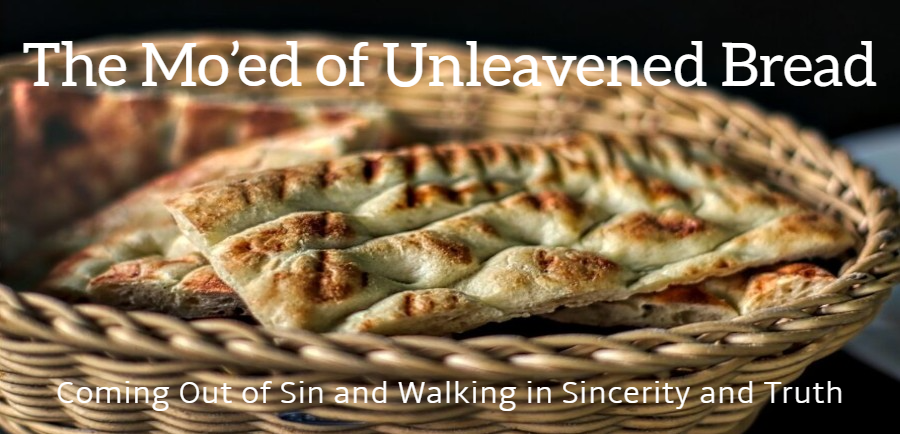
Coming Out of Sin and Walking in Sincerity and Truth
After Pesach comes movement and change. After deliverance comes separation. After redemption comes the call to walk differently.
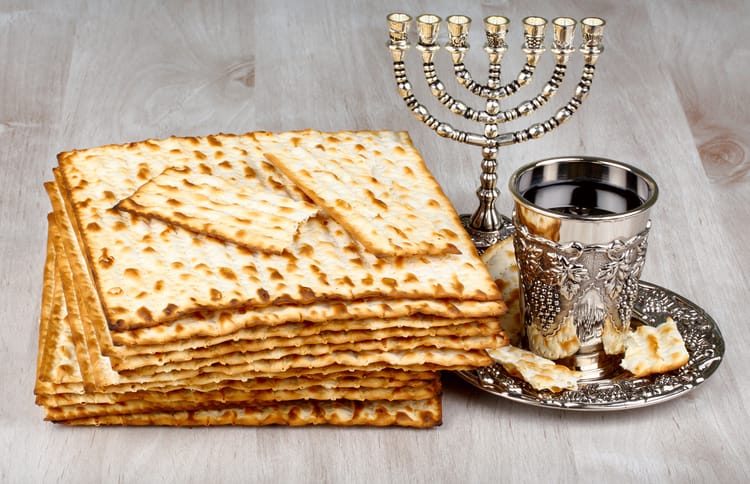
This is what the Mo’ed (Feast or Appointed Time) of Unleavened Bread teaches. It is not merely a memorial about bread. It is a divine appointment that reveals what the redeemed life must look like after deliverance. Those who partake of the Pesach (Passover) Lamb are not called to remain in the old leaven of bondage, compromise, falsehood, and sin. They are called to come out, to be cleansed, to separate, and to walk in righteousness before Avinu Y’hovah.
The Feast of Unleavened Bread is therefore not an optional spiritual illustration. It is one of YHVH’s appointed times, and it teaches His people that redemption must be followed by obedience. It shows that leaving Mitsrayim (Egypt) is not enough if Mitsrayim still lives within us.
YHVH has appointed the Feast of Unleavened Bread
This feast is established by Y’hovah Himself. It is not a later invention, and it does not belong to religious tradition alone. It is part of the rhythm of Y’hovah’s calendar and part of His discipleship pattern for His people.
“And on the fifteenth day of this month is the Festival of Matzoth to יהוה/YHVH—seven days you eat unleavened bread. On the first day you have a set-apart gathering, you do no servile work. And you shall bring an offering made by fire to יהוה for seven days. On the seventh day is a set-apart gathering, you do no servile work.”
Wayyiqra (Leviticus) 23:6–8, TS2009
The feast begins on the fifteenth day of the first month and continues for seven days. The first day is a Shabbat-rest assembly, and the seventh day is also a Shabbat-rest assembly. This is not random. The whole feast is framed by holiness. It begins in set-apartness and ends in set-apartness.
This shows us that coming out of sin is not a casual matter. Y’hovah marks this time with sacred boundaries. He is teaching His people that redemption is holy, separation is holy, and the life that follows deliverance is meant to be holy.
This Feast Begins Immediately After Pesach
The order matters. Pesach comes first. Then Unleavened Bread.
This is a powerful picture. First comes deliverance through the Lamb. Then comes the removal of leaven. First comes redemption. Then comes sanctification. First comes being brought out. Then comes learning how to live as a people who have been brought out.
The pattern is seen in Yisra’ĕl’s history and in the walk of every talmid. Y’hovah does not rescue us so that we can remain as we were. He rescues us so that we may become His set-apart people.
Shemoth 12:14–20 — The Foundational Command
The foundational instructions for this feast are given clearly in Shemoth. This is the root from which all later understanding grows:
“And this day shall become to you a remembrance. And you shall celebrate it as a festival to יהוה throughout your generations—celebrate it as a festival, an everlasting law. Seven days you shall eat unleavened bread. Indeed, on the first day you cause leaven to cease from your houses. For whoever eats leavened bread from the first day until the seventh day, that being shall be cut off from Yisra’ĕl. And on the first day is a set-apart gathering, and on the seventh day you have a set-apart gathering. No work at all is done on them, only that which is eaten by every being, that alone is prepared by you. And you shall guard the Festival of Matzoth, for on this same day I brought your divisions out of the land of Mitsrayim. And you shall guard this day throughout your generations, an everlasting law. In the first month, on the fourteenth day of the new moon, in the evening, you shall eat unleavened bread, until the twenty-first day of the month in the evening. For seven days no leaven is to be found in your houses, for if anyone eats what is leavened, that same being shall be cut off from the congregation of Yisra’ĕl, whether sojourner or native of the land. Do not eat that which is leavened—in all your dwellings you are to eat unleavened bread.”
Shemoth (Exodus) 12:14–20, TS2009
This passage is weighty. YHVH ties this feast directly to the exodus from Mitsrayim. It is a remembrance of deliverance, but not of deliverance alone. It is a remembrance that those who are brought out must now live separated from the leaven (sin) of the old life.
Notice the repeated emphasis:
- seven days of unleavened bread
- leaven removed from the houses
- no leaven found in the houses
- the first and seventh days as set-apart gatherings
- this day guarded throughout the generations
Y’hovah is teaching His people through repeated physical obedience. The lesson is not abstract. It enters the home, the table, the kitchen, the schedule, and the community.
The Meaning of Leaven
In Scripture, leaven often pictures something that spreads quietly but powerfully. It works through the whole lump. Because of this, it becomes a fitting picture of sin, corruption, hypocrisy, and false doctrine.
Y’hoshua Himself explained this principle to His talmidim.
“Then they understood that He did not say to beware of the leaven of bread, but of the teaching of the Pharisees and Sadducees.”
Mattithyahu (Matthew) 16:12, TS2009
“And He was warning them, saying, ‘Mind, beware of the leaven of the Pharisees, and the leaven of Hĕrod.’ ”
Marqos (Mark) 8:15, TS2009
“Meanwhile, when an innumerable crowd of people had gathered together, so that they trampled one another, He began to say to His taught ones first, ‘Beware of the leaven of the Pharisees, which is hypocrisy.’ ”
Luqas (Luke) 12:1, TS2009
These passages help us interpret the feast spiritually. Leaven is not only a substance in dough that makes it rise. It becomes a prophetic picture of influence that corrupts. In one place, Rabbi Y’hoshua identifies leaven as false teaching. In another, as hypocrisy. In Mark, He also warns of the leaven of Hĕrod, showing that corrupt worldly power and political-spiritual compromise can also work like leaven.
So when we remove leaven physically from our homes, we are not engaging in empty ritual. We are learning a spiritual pattern. By physical obedience, we learn spiritual truth.
We search our homes because YHVH wants us to search our hearts.
We remove the leaven because YHVH wants us to remove corruption.
We eat unleavened bread because YeHoVaH wants us to walk in sincerity and truth.
The Feast Symbolizes the First Step Out of Sin
The first day, Abib 15, begins the festival with a Shabbat-rest and marks the beginning of separation. The seventh day, Abib 21, is also a Shabbat-rest and points to the completion of departure from the old realm. Together they form a beautiful picture: the redeemed person is not called merely to begin well, but to continue and complete the journey of separation from sin.
The feast teaches movement and change.
Not perfection in a day, but a real departure. Not mere emotion, but obedient action. Not religion without transformation, but a practical turning from the old life.
Numbers 28:17–25 — The Feast Is Also a Time of Worship and Offering
The Feast of Unleavened Bread is not merely negative, as though its whole message were only “remove.” It is also a time of worship, consecration, and offering before Avinu.
“And on the fifteenth day of this month is a festival, seven days unleavened bread is eaten. On the first day is a set-apart gathering, you do no servile work. And you shall bring near an offering made by fire as an ascending offering to יהוה: two young bulls, one ram, and seven yearling lambs, perfect ones they are for you, with their grain offering of fine flour mixed with oil—three-tenths of an ĕphah for a bull, and two-tenths for a ram, and one-tenth for each of the seven lambs. Also one goat as a sin offering, to make atonement for you. Prepare these besides the morning ascending offering which is for a continual ascending offering. According to these you prepare the food as an offering made by fire daily for seven days, as a sweet fragrance to יהוה. It is prepared besides the continual ascending offering and its drink offering. And on the seventh day you have a set-apart gathering, you do no servile work.”
Bemidbar (Numbers) 28:17–25, TS2009
This reminds us that the feast is not only about ceasing from leaven. It is about drawing near to Y’hovah in a set-apart way. The life that puts away sin must also become a life that offers itself in devotion. Separation without worship becomes cold. Cleansing without surrender becomes empty. The feast teaches both removal and consecration.
Romans 6:13–22 — From Sin to Righteousness
Rabbi Sha’ul (apostle Paul) explains the inner meaning of this feast in language that fits it perfectly. Though he is not quoting the feast directly in Romans 6, the pattern is the same: come out of the old master, refuse the old bondage, and present yourself to Elohim for righteousness.
“Neither present your members as instruments of unrighteousness to sin, but present yourselves to Elohim (God) as being alive from the dead, and your members as instruments of righteousness to Elohim. For sin shall not rule over you, for you are not under Torah but under favour. What then? Shall we sin because we are not under Torah, but under favour? Let it not be! Do you not know that to whom you present yourselves servants for obedience, you are servants whom you obey, whether of sin unto death, or of obedience unto righteousness? But thanks to Elohim that, though you were servants of sin, yet you obeyed from the heart that form of teaching to which you were entrusted, and having been set free from sin, you became servants of righteousness. I speak as men because of the weakness of your flesh. For as you did present your members as servants of uncleanness, and of lawlessness resulting in more lawlessness, so now present your members as servants of righteousness unto set-apartness. For when you were servants of sin, you were free from righteousness. What fruit therefore were you having then, over which you are now ashamed? For the end thereof is death. But now, having been set free from sin and having become servants of Elohim, you have your fruit unto set-apartness, and the end, everlasting life. For the wages of sin is death, but the favourable gift of Elohim is everlasting life in Messiah יהושע our Master.”
Romans 6:13–22, TS2009
This is the language of Unleavened Bread.
Do not present yourselves to sin. Present yourselves to Elohim. You were servants of sin, but now you are servants of righteousness.
The fruit of the old life was shame and death. The fruit of the new life is set-apartness and everlasting life.
That is exactly what the feast teaches in embodied form. Remove the leaven. Refuse the old mastery. Walk in the Ruach (Spirit) as one who has been brought out.
1 Corinthians 5:6–8 — The Brit HaDashah (New Covenant) Interpretation of the Feast
If there is any doubt that this feast carries direct discipleship meaning for the body of Messiah, Rabbi Sha’ul removes it. He explicitly connects Pesach, leaven, and the call to spiritual cleansing:
“Your boasting is not good. Do you not know that a little leaven leavens the entire lump? Therefore cleanse out the old leaven, so that you are a new lump, as you are unleavened. For also Messiah, our Passover, was slaughtered for us. So then let us observe the festival, not with old leaven, nor with the leaven of evil and wickedness, but with the unleavened bread of sincerity and truth.”
Qorintiyim Aleph (1 Corinthians) 5:6–8, TS2009
This passage is precious because it ties the whole pattern together.
Messiah is our Pesach.
Therefore, the old leaven must be cleansed out. Therefore, the festival is to be kept. Therefore, the deeper meaning is sincerity and truth rather than evil and wickedness.
Rabbi Sha’ul does not say the feast has no value. He does not say the imagery has ended. He does not turn it into a vague metaphor disconnected from practice. Instead, he deepens its meaning and shows why it matters even more for those who know our Messiah.
The redeemed are called to live as an unleavened people.
Leaven and False Doctrine
False doctrine does not remain in the mind only. It eventually forms habits, values, excuses, and ways of life. Wrong teaching produces wrong fruit. Corrupt doctrine produces corrupt living.
This is why our Rabbi Gadol Y’hoshua warned about the teaching of the Pharisees and Sadducees. False religion can appear devout while spreading pride, blindness, compromise, and hypocrisy. A teaching may sound learned, respectable, inherited, or popular, yet still be leaven.
A talmid must therefore ask:
What teaching have I received that works against obedience?
What inherited tradition has shaped me more than Scripture?
What attitudes have entered my house and heart under the name of faith?
What hidden hypocrisy am I tolerating?
Leaven is dangerous because it spreads quietly. One crumb becomes a pattern; one tolerated lie becomes a system; one compromise becomes a culture. That is why Avinu Y’hovah commands total removal.
Unleavened Bread as Sincerity and Truth
The feast is not only about what is removed, but also about what is received. We are not only to reject leaven; we are to eat unleavened bread. That is a positive act.
Netzari Judaism calls it “the unleavened bread of sincerity and truth.”
Sincerity means what is genuine, unmixed, undefiled, without hidden corruption.
Truth means what is aligned with Y’hovah’s reality, His Word, His character, and His ways.
A talmid cannot merely empty his life of visible sin and then remain spiritually unfed. He must take in truth. He must feed on what is clean, honest, and holy. He must fill his life with the Word of Y’hovah, with sound doctrine, with obedience, and with the example of Rabbi Gadol Y’hoshua.
Acts 20:6–7 — The Feast Still Marked the Rhythm of the Talmidim
The Book of Acts also shows that this moed continued to mark the lives of the early talmidim.
“And we sailed away from Philippi after the Days of Unleavened Bread, and in five days came to them at Troas, where we stayed seven days. And on the first day of the week, when the taught ones came together to break bread, Sha’ul, intending to depart the next day, was talking to them, and was extending the message until midnight.”
Maʽasei (Acts) 20:6–7, TS2009
This does not prove every detail by itself, but it does show that the Days of Unleavened Bread remained part of the timekeeping and lived reality of the early community. The moedim had not become meaningless relics. They still shaped the life of the talmidim.
The Seven Days Teach Ongoing Cleansing
The feast lasts seven days, and that too is instructive. Y’hovah could have made this a one-day reminder, but He did not. He made it long enough to form attention, awareness, and habit.
For seven days:
- leaven is removed
- unleavened bread is eaten
- homes are watched carefully
- the people remember they were brought out of Mitsrayim
This teaches that coming out of sin is not a one-moment sentiment. It is a lifetime walk. It is lived out in repeated obedience. It requires vigilance.
Practical Restoration: How a Talmid Walks This Feast Faithfully
The Feast of Unleavened Bread becomes deeply practical when we let it search us.
Remove the physical leaven seriously
Do the command carefully, not casually. Let your hands teach your heart that Y’hovah cares about what is hidden.
Search for spiritual leaven honestly
Ask Y’hovah to expose sin, compromise, bitterness, pride, hypocrisy, and false teaching.
Examine what you believe
Test every doctrine by Scripture. Do not keep inherited leaven because it is familiar.
Replace the old with truth
Do not merely empty. Fill. Feed on the Word, on sound teaching, on prayer, walking in the Ruach, and on the pattern of our Rabbi Gadol Y’hoshua.
Walk all seven days intentionally
Let the full duration of the feast disciple you in consistency. Holiness is not a burst; it is a walk.
Remember that deliverance demands response
Pesach is not permission to remain in bondage. It is the beginning of a new life.
Final Exhortation
The Mo’ed of Unleavened Bread is Avinu Y’hovah’s call to come out fully.
COME OUT of sin, false doctrine, hypocrisy, and corruption. Come out of the mixture.
And then walk forward in sincerity and truth.
Pesach tells us that redemption has been provided through the Lamb.
Unleavened Bread tells us that the redeemed must now live as the redeemed.
May this feast search our homes, search our hearts, and may it expose every hidden leaven.
May Y’hovah strengthen us through His TORAH and the power of His Ruach and the example of Y’hoshua HaMashiach to walk as an unleavened people before Him.
By Rabbi Francisco Arbas
📧 franciscoarbas.yisrael@gmail.com
Following His ‘WAY’ — Netzari Mashiach Judaism
Comments ()