Tradition, Expediency, and Rationalism: Three Quiet Rivals to the Authority of Scripture
The Fundamental Attack on God’s Authority
The most basic assault on the authority of Elohim is the assumption that His Word is not enough—that Scripture needs an assistant, a governor, or a replacement. This shows up in every generation—sometimes loud, but often quiet:
The belief that we need more than His Word to guide us through life.
When we elevate standards that originate outside of Scripture (or treat our own reasoning as the final court), we are functionally declaring that the Scriptures are insufficient. And once that door opens, anything can be smuggled in, wearing religious clothing.
This is how talmidim (disciples) drift: not always through open rebellion—but through “helpful” substitutes that slowly relocate our trust from Avinu Y'hovah to man-made frameworks.
Once a talmid begins to trust something other than Scripture as equal authority, the heart starts to drift. Not always into obvious sin—but into a different center: a center where Avinu Y'hovah is no longer obeyed as King, but negotiated with as a concept.
Scripture warns us not to tamper with His words—neither adding nor subtracting:
“Ye shall not add unto the word which I command you, neither shall ye diminish from it…”
Dĕvarim (Deuteronomy) 4:2, JPS 1917
And again:
“Every word of God is tried… Add thou not unto His words, lest He reprove thee…”
Mishlei (Proverbs) 30:5–6, JPS 1917
When we lift standards that originate outside Scripture—whether tradition, practical shortcuts, or man’s reasoning—we are saying, in effect, the Word is insufficient. And that belief is a seed that grows into a weakened relationship with Avinu Elyon.
Because a relationship with Him is not built on cleverness. It’s built on hearing and obeying.
“And it shall come to pass, if ye shall hearken diligently unto My commandments…”
Dĕvarim (Deuteronomy) 11:13, JPS 1917
Scripture warns against adding to YHVH’s Word and reshaping it into something we think is more comfortable, more efficient, or more “reasonable.”
So let’s identify three hostile influences that commonly do this.
The Three Hostile Influences
These three influences are “hostile” not because they always look evil, but because they often look religious, helpful, and reasonable—while quietly dethroning Scripture.
- Tradition – Scripture’s fallible interpreter.
- Expediency – Shortcutting obedience to get outcomes.
- Rationalism – Man’s reason sitting as a judge over the text.
Let’s examine each one through the lens of the Master, Y’hoshua HaMashiach.
1) Tradition
Scripture’s Fallible Interpreter
Tradition can be morally neutral. People pass down customs, sayings, patterns of worship, community habits—some are harmless, some are beneficial. But tradition becomes hostile when it becomes:
- a replacement for Scripture
- an untouchable authority
- a badge of righteousness
- a boundary marker that matters more than obedience
This is exactly what Y’hoshua confronted.
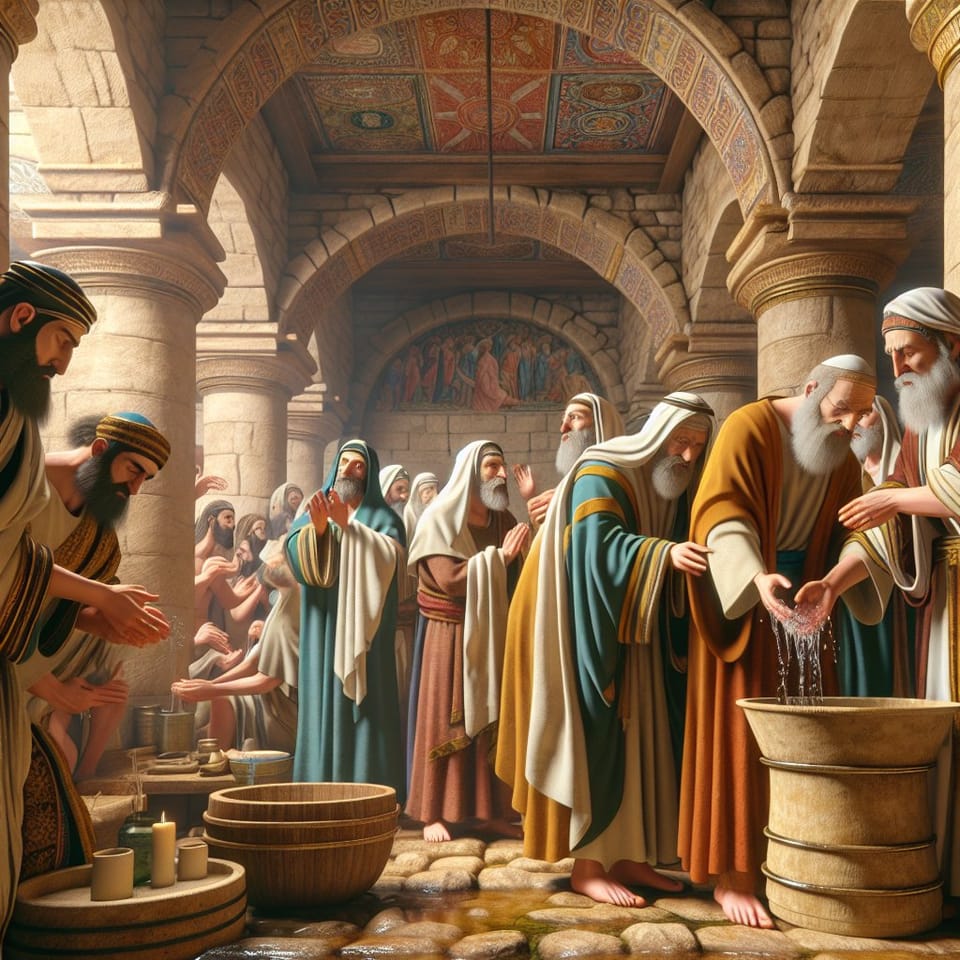
“Why is it that your talmidim break the Tradition of the Elders? They don’t do n’tilat-yadayim before they eat!” He answered, “Indeed, why do you break the command of God by your tradition?
Mattithyahu (Matthew) 15:2–3 (CJB)
Notice the sharp divide:
- Tradition of elders…
- Commandment of Elohim…
Y’hoshua did not treat tradition as “equal.” He treated it as something that must remain under the authority of the Word.
The hidden danger: tradition masquerading as “God’s will”
Tradition becomes most dangerous when it feels like obedience, but it is actually allegiance to something else—something inherited, familiar, socially enforced, or emotionally comforting.
This is why Rabbi Sha’ul warns talmidim:
Watch out, so that no one will take you captive by means of philosophy and empty deceit, following human tradition which accords with the elemental spirits of the world but does not accord with the Messiah.
Qolossim (Colossians) 2:8 (CJB)
A Netzari test for tradition
Ask:
- Does this tradition help me obey Scripture—or does it help me avoid Scripture?
- Does it produce humility and fruit—or pride and policing?
- If Scripture confronts it, will I repent—or defend it?
Can you think of any modern traditions that don't align with scripture? Like the tradition in Judaism of lighting 2 candles on Shabbat or in Christianity going to a church on the first day of the week, Sunday?
Any tradition that cannot be tested has already begun to function like an idol. (And idols always hate audits.)
2) Expediency
Shortcutting Scripture to accomplish “good.”
Expediency is one of the most deceptive traps because it often sounds righteous. It says:
- “We’re still doing good!”
- “We’re still serving Elohim!”
- “We’re still accomplishing something biblical!”
But expediency is doing a ‘good’ thing while taking a shortcut through obedience.
It obeys the parts of Scripture we find gratifying—while ignoring the parts we find costly, inconvenient, or confrontational.
King Saul's disobedience
A significant theme in the biblical narrative, particularly in the context of his expedient decisions that led to his downfall. His actions illustrate the consequences of prioritizing immediate results over obedience to God's commands.
Key Instances of Disobedience
Impatience and Sacrifice
- Unauthorized Sacrifice: King Saul offered a sacrifice himself instead of waiting for the prophet Samuel, violating YHVH Elohei's command. This act of impatience was seen as foolishness, leading to Y'hovah's rejection of Saul as king.
Partial Obedience
- Amalekite Command: King Saul was instructed to completely destroy the Amalekites and all their possessions. However, he spared the best livestock, rationalizing that they would be used for sacrifices to God. This partial obedience demonstrated a lack of true submission to God's will.
Blame and Excuses
- Shifting Responsibility: When confronted by Samuel, King Saul blamed his soldiers and the people for his actions, showing a failure to take responsibility for his disobedience. He claimed he acted out of fear of losing their support.
Consequences of Disobedience
- Loss of Kingship: Saul's repeated disobedience led to Avinu Y'hovah rejecting him as king, marking a pivotal moment in Yisrael's history. His inability to follow YHVH's commands resulted in the rise of David as his successor.
- Spiritual Decline: King Saul's disobedience not only cost him his throne but also led to a decline in his mental state, as he became increasingly paranoid and erratic.
Saul's story serves as a cautionary tale about the dangers of prioritizing expediency over faithfulness to God's commands.
The fruit of expediency
Expediency trains a talmid (disciple) to become comfortable with selective obedience—where Scripture is “followed” as long as it doesn’t cost too much.
But the heart that loves Avinu Y'hovah doesn’t negotiate truth. It yields.
“To obey is better than sacrifice…”
Shemu’el Aleph (1 Samuel) 15:22, JPS 1917
Expediency says: “Look at my sacrifice.”
Avinu (Our Father) says: “Where is your obedience?”
3) Rationalism
Supremacy of man’s reason over Elohim’s Word
Rationalism isn’t merely “thinking carefully.” Talmidim should be thoughtful, discerning, and wise. The problem is when human reason becomes the final authority.
Rationalism becomes hostile when:
- Scripture must pass the test of “what seems reasonable to me”
- the supernatural is dismissed because it offends modern assumptions
- man’s intellect is enthroned as judge over Elohim’s voice
We see this in the Sadducees’ attempt to “reason away” the resurrection:
“Yeshua answered them, “The reason you go astray is that you are ignorant both of the Tanakh and of the power of God.”
Mattithyahu (Matthew) 22:29 (CJB)
That statement is devastating. Y’hoshua identifies two roots of error:
- Not knowing the Scriptures
- Not knowing the power of Elohim
Rationalism often claims to honor knowledge, but it rejects the kind of knowledge Scripture requires: humility before Avinu Y'hovah.
“Trust in the LORD with all thy heart, and lean not upon thine own understanding.”
Mishlei (Proverbs) 3:5, JPS 1917
Rationalism leans on its own understanding, then calls that “maturity.”
Scripture calls it a trap.
The Common Thread
Tradition, expediency, and rationalism have a shared goal—even when they look different:
They all dethrone Scripture as the supreme standard.
- Tradition adds a parallel authority
- Expediency bypasses obedience for outcomes
- Rationalism judges Scripture by the mind of man
And when Scripture is dethroned, the relationship with Avinu Y'hovah becomes thin—because a true relationship is built on:
- hearing His Word, TORAH
- trusting His character, believing He is YHVH Elohei
- obeying His mitzvot, laws, precepts
- daily walking in His ways (Halakah)
“If ye love me, keep my commandments.”
Yoḥanan (John) 14:15
That is not “salvation by works.” That is covenant love expressed in discipleship.
Self-Examination for Talmidim
If we want restoration, we must diagnose drift honestly.
In my religious world, what do I treat as untouchable?
If something cannot be questioned by Scripture, tradition has become authority.
Where do I compromise “for good reasons”?
If I frequently excuse disobedience on the grounds of outcomes, expediency has trained my conscience.
Where do I demand Scripture fit my framework and understanding?
If I accept Scripture only where it makes sense to me, rationalism is on the throne.
The Path Back to Relationship
The return is not complicated—but it is often humbling. It takes teshuvah (repentance). Ask YHVH "To turn you back" to Him. Teshuvah signifies a process of ethical transformation and a commitment to change one's behavior (renewing of the mind). Pray for the power of Y'hovah's Ruach and eyes to see spiritual truth.
- Return Scripture to the highest seat
“Thy word is a lamp unto my feet, and a light unto my path.”
Tehillim (Psalms) 119:105, JPS 1917
- Obey even when it costs you
“Don’t deceive yourselves by only hearing what the Word says, but do it!”
Ya’aqob (James) 1:22 (CJB)
- Refuse captivity to man-made authority structures
“…in vain do they worship me, teaching for doctrines the commandments of men.”
Mattithyahu (Matthew) 15:9
- Choose trust over control
“The fear of the LORD is the beginning of knowledge…”
Mishlei (Proverbs) 1:7, JPS 1917
This is the restoration of talmidut: not religion-as-performance, but relationship-as-obedient-walking.
And yes—your flesh will complain. Your pride will negotiate. Your old habits will throw a tantrum.
Closing Charge
Once we surrender to tradition-as-authority, expediency-as-virtue, or rationalism-as-judge, we lose sight of the sufficient and supreme standard we are called to follow. TORAH! (His instructions, the whole Bible.)
So test yourself. Identify drift. Ask Y'hovah to reveal these rivals to Scripture's authority in your life. Teshuvah where needed. And fix your eyes again on the Word of Elohim and let the Ruach guide you—so you can walk with Avinu Y'hovah in truth. They will know you by your fruit!
By Rabbi Francisco Arbas
📧 franciscoarbas.yisrael@gmail.com
Following His ‘WAY’ — Netzari Mashiach Judaism


Comments ()