Y’hoshua, Master of Shabbat
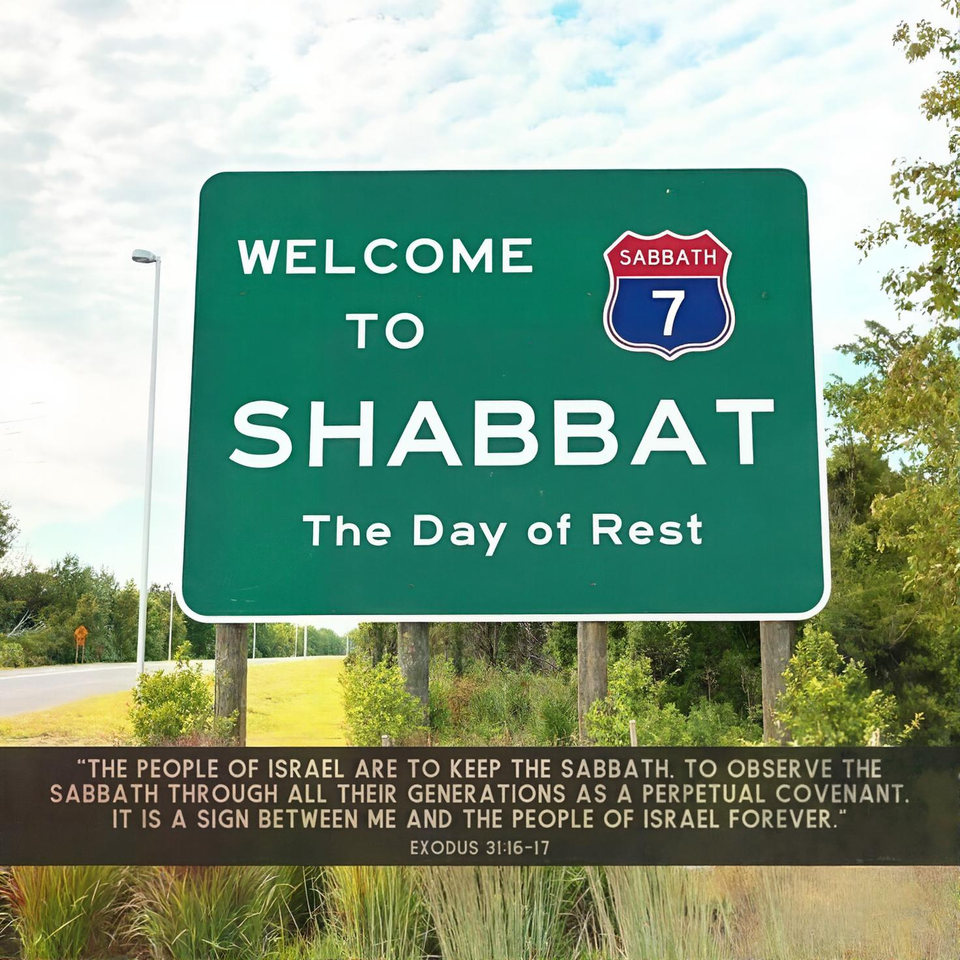
Restored Purpose, Divine Authority, and the Shabbat-Rest That Remains (Ivrim 4:9)
The Question Isn’t “Is Shabbat Valid?”—It’s “What Is Shabbat For?”
Many debates assume the issue is whether Shabbat matters today. But the Gospel scenes show something sharper:
- Shabbat is the 4th commandment and should be honored.
Shemoth (Exodus) 20:8 (CJB) - The conflict is over man-made burdens vs. Y’hovah’s intent.
- Y’hoshua reveals Shabbat’s purpose and establishes His authority to interpret TORAH rightly.
And yes—if your “Shabbat observance” makes you harsh, anxious, and cranky… You may have kept the day, but missed the King.
Shabbat’s Purpose in Torah: Creation, Covenant Sign, and Freedom
Shabbat is not a random ritual. It is rooted in creation, declared in covenant, and tied to freedom.
“Remember the sabbath day, to keep it holy…”
“Remember the sabbath day, to keep it holy. Six days shalt thou labour, and do all thy work; but the seventh day is a sabbath unto the LORD thy God, in it thou shalt not do any manner of work, thou, nor thy son, nor thy daughter, thy man-servant, nor thy maid-servant, nor thy cattle, nor thy stranger that is within thy gates; for in six days the LORD made heaven and earth, the sea, and all that in them is, and rested the seventh day; wherefore the LORD blessed the sabbath day, and hallowed it.”
Shemoth (Exodus) 20:8–11, JPS 1917
Shabbat is also tied to deliverance, not slavery.
“Observe the sabbath day, to keep it holy, as the LORD thy God commanded thee. Six days shalt thou labour, and do all thy work; but the seventh day is a sabbath unto the LORD thy God, in it thou shalt not do any manner of work, thou, nor thy son, nor thy daughter, nor thy man-servant, nor thy maid-servant, nor thine ox, nor thine ass, nor any of thy cattle, nor thy stranger that is within thy gates; that thy man-servant and thy maid-servant may rest as well as thou. And thou shalt remember that thou wast a servant in the land of Egypt, and the LORD thy God brought thee out thence by a mighty hand and by an outstretched arm; therefore the LORD thy God commanded thee to keep the sabbath day.”
Devarim (Deuteronomy) 5:12–15, JPS 1917
And Shabbat is explicitly called a sign between Y’hovah and His people:
“Speak thou also unto the children of Israel, saying: Verily ye shall keep My sabbaths; for it is a sign between Me and you throughout your generations, that ye may know that I am the LORD who sanctify you. Ye shall keep the sabbath therefore; for it is holy unto you; every one that profaneth it shall surely be put to death; for whosoever doeth any work therein, that soul shall be cut off from among his people. Six days shall work be done; but on the seventh day is a sabbath of solemn rest, holy to the LORD; whosoever doeth any work in the sabbath day, he shall surely be put to death. Wherefore the children of Israel shall keep the sabbath, to observe the sabbath throughout their generations, for a perpetual covenant. It is a sign between Me and the children of Israel for ever; for in six days the LORD made heaven and earth, and on the seventh day He ceased from work and rested.”
Shemoth (Exodus) 31:13–17, JPS 1917
So when Y’hoshua steps into Shabbat controversies, He is not stepping into “a Jewish tradition.” He is stepping into Y’hovah’s own mitzvah and covenant sign and restoring it from distortion.
Key Incident One: The Grainfield Controversy
Here is the famous flashpoint: talmidim pluck heads of grain on Shabbat. The accusation is not “you stole,” but “you violated our Shabbat boundary.”
“And it came to be that He went through the grainfields on the Sabbath, and as they went His taught ones began to pluck heads of grain. And the Pharisees said to Him, “See, why are they doing what is not right on the Sabbath?” And He said to them, “Have you never read what Dawid did when he was in need and hungry, he and those with him? How he went into the House of Elohim in the days of Ebyathar the high priest, and ate the showbread, which is not right to eat except for the priests, and also gave some to those who were with him?” And He said to them, “The Sabbath was made for man, and not man for the Sabbath. Therefore the Son of Aḏam is Master even of the Sabbath.”
Marqos (Mark) 2:23–28, TS2009
What Y’hoshua is doing here (and what He is NOT doing)
He is NOT canceling Shabbat.
He is confronting a Shabbat framework that forgot:
- Mercy matters (need and hunger)
- Torah’s priorities are coherent (life, compassion, righteousness)
- Shabbat is a gift (“made for man”)
- And most importantly: He claims authority: “Master even of the Sabbath.”
His authority is not “my opinion vs. yours”
Y’hoshua’s claim is theological: Shabbat belongs to Y’hovah—yet Y’hoshua claims mastery in a way that places Him as the authorized interpreter and ruler within Y’hovah’s covenant order.
Key Incident Two: Healing on Shabbat
The signs of restoration—the Kingdom breaking into broken bodies and oppressed lives.
“And He entered again into the congregation, and a man was there who had a withered hand. And they were watching Him closely, whether He would heal him on the Sabbath, so as to accuse Him. And He said to the man who had the withered hand, “Stand forth.” And He said to them, “Is it right to do good on the Sabbath, or to do evil? To save life, or to kill?” But they were silent. And having looked around at them with displeasure, being grieved by the hardness of their hearts, He said to the man, “Stretch out your hand.” And he stretched it out, and his hand was restored as whole as the other. And the Pharisees went out and immediately plotted with the Herodians against Him, how they might destroy Him.”
Marqos (Mark) 3:1–6, TS2009
The point of the question
Y’hoshua does something brilliant and piercing: He frames the issue in moral clarity:
- Shabbat is not a day for legal theater.
- Shabbat is a day where the heart of TORAH is visible: to do good, save life, and restore.
If your “Shabbat rules” forbid doing good, you don’t have stricter Shabbat—you have a different emunah (faith) than that of the original talmidim.
Theological Implications
“Master of Shabbat” signals divine authority and Messianic identity
To say “Master of Shabbat” is to claim authority over:
- Its meaning
- Its boundaries
- Its purpose
- Its role in the Kingdom
Y’hoshua stands as the One who restores TORAH to its intended function—without man-made distortion which is RELIGION—and He reveals Shabbat as a signpost pointing toward the reign of Elohim.
Shabbat’s purpose: restoration, freedom, delight, and covenant communion
Shabbat is meant to produce a people who look like Y’hovah’s character—holy, merciful, just, and free.
“If thou turn away thy foot because of the sabbath, From pursuing thy business on My holy day; And call the sabbath a delight, The holy of the LORD honourable; And shalt honour it, not doing thy wonted ways, Nor pursuing thy business, nor speaking thereof; Then shalt thou delight thyself in the LORD, And I will make thee to ride upon the high places of the earth, And I will feed thee with the heritage of Jacob thy father; For the mouth of the LORD hath spoken it.”
Yeshayahu (Isaiah) 58:13–14, JPS 1917
Shabbat is not merely “stop doing.” It is also “start delighting”—in Y’hovah, in Avinu's ways, in His restoration.
Connecting Ivrim (Hebrews) 4:9: The Shabbat-Rest That Remains
Now we connect the “Master of Shabbat” revelation to the deeper Shabbat theme in Ivrim (Hebrews): Shabbat is also a prophetic pattern—a continuing promise.
“So then, there remains a Sabbath-keeping for the people of Elohim. For the one who has entered His rest has himself also rested from his works as Elohim did from His own.”
Ivrim (Hebrews) 4:9–10, TS2009
What this means for Netzari talmidim (Nazarene disciples)
- There remains a Shabbat-keeping: not abolished, not obsolete, not replaced.
- Shabbat points to Y’hovah’s rest—a covenant reality we enter through faithful obedience and trust.
- Y’hoshua, as Master of Shabbat, does not erase the sign—He brings us into its true depth:
- Rest from self-rule
- Rest from sin’s slavery
- Rest that produces righteousness
- Rest that anticipates the fullness of the Kingdom
Shabbat is both:
- A weekly covenant sign and delight, and
- A prophetic rehearsal of the greater rest of Elohim.
Discipleship Application: How Do We Walk This Out?
Here is a simple Netzari framework—Shabbat as TORAH-centered discipleship, not religious performance:
A) Cease and Remember
Stop the “Pharaoh system” of constant production. Remember creation. Remember the 4th commandment. Remember redemption. Remember who sanctifies you—Avinu Y’hovah.
B) Delight and Worship
Call Shabbat a delight (Yeshayahu 58). Build a household rhythm: Scripture, prayer, table fellowship, and gratitude.
C) Do Good and Restore
Follow Y’hoshua’s pattern: Shabbat is an ideal day for mercy, encouragement, healing prayer, reconciliation, and lifting burdens.
D) Refuse Man-Made Yokes
Beware of rules that produce fear, pride, or condemnation. TORAH produces life; religious control produces heaviness and bondage.
Closing Exhortation: Shabbat with the Master
If our Rabbi Y’hoshua is the Master of Shabbat, then Shabbat must look like Him:
- Truth without hypocrisy
- Holiness without cruelty
- Obedience without bondage
- Rest that restores
May our Shabbat-keeping declare to the world: Y’hovah reigns, His TORAH is holy, just, and good. His Mashiach (Messiah) has restored what religion has robbed, distorted, or changed.
Our other Shabbat articles:
 Rabbi Francisco Arbas
 Rabbi Francisco Arbas
 Rabbi Francisco Arbas
 Rabbi Francisco Arbas
 Rabbi Francisco Arbas
By Rabbi Francisco Arbas
📧 franciscoarbas.yisrael@gmail.com
Following His ‘WAY’ — Netzari Mashiach Judaism



Comments ()