Why Teaching TORAH Still Matters: Restoring Biblical Worldview Through Talmidut?
Why I’m Asking This Question at All?
With the rate at which our society continues to degrade, I’ve found myself asking—almost painfully—What’s the use in teaching the Bible anymore? Why does showing people what the Scriptures say even matter, much less helping them understand what they mean?
And I don’t only mean the secular world.
Yes, modern secular culture often treats Scripture like a museum artifact: interesting, ancient, and totally unnecessary. But my heavier concern is what’s happening among self-professed believers—among people who say they love Elohim, who say they follow HaMashiach, who say they “believe the Bible.”
Because when I look at the lives many of us live here in the West—our comfort, our consumerism, our entertainment addiction, our compartmentalized faith, our disappearing influence, and the way politics can become our “gospel”—I have to ask:
Do we really want what the Scriptures actually say?
Or do we want a spiritual product that blesses our preferences?
In Netzari Mashiach Judaism, we don’t treat TORAH as “just the first five books.” We use TORAH the way Scripture itself often uses it: Y’hovah’s instructions—His full counsel—Tanakh and Brit HaDashah. If that TORAH is no longer shaping our thinking and behavior, then what we have left is not discipleship… it’s religion with a Hebrew accent.
And yes—religion can be very polite while it quietly kills obedience.
The Crisis Is Not “Out There”—It’s In Here
One of the most alarming findings of recent decades is how few people in our society, even many who identify as “Believers (God followers),” hold anything resembling a biblical worldview.
What is a biblical worldview?
A biblical worldview is a framework of beliefs and values grounded in the teachings of the Bible that shapes how individuals interpret reality and make decisions in life. It emphasizes seeing the world through the lens of Scripture (TORAH), recognizing God as the ultimate authority and truth.
A major worldview study published in March 2020 reported that although seven out of ten Americans identify as Christian, only 6% hold a biblical worldview. Even more sobering: only 2% of those ages 18–29 were found to hold a biblical worldview.
Let that sink in.
If those numbers are even close to accurate, we are witnessing a generational collapse of scriptural thinking—not only in society, but in the religious world.
And that collapse doesn’t stay theoretical. It shows up in what people celebrate, excuse, normalize, and defend.
For example, pornography is a clear and devastating marker of cultural decay—and believers are not untouched by it. Barna reported in October 2024 that 54% of practicing believers said they consume pornography at least occasionally.
When moral boundaries blur, people eventually stop even seeing the need for sound teaching. As Pew reported, a majority of U.S. Christians said sex between unmarried adults in a committed relationship is sometimes or always acceptable (with higher shares among some Christian groups).
So the issue isn’t merely that people “don’t know their Bibles.”
It’s that many no longer believe the Bible has authority over their desires.
That’s not only a literacy problem. That is a discipleship problem.
What This Decline Really Reveals
When the biblical worldview disappears, people don’t become “neutral.”
They become discipled by something else.
Media becomes the teacher.
Politics becomes the teacher.
Pain becomes the teacher.
Desire becomes the teacher.
The crowd becomes the teacher.
And once that happens, people will still quote Scripture—but they will treat it like seasoning rather than the meal. They will use verses as emotional support instead of receiving TORAH as the Master’s instructions.
That is why this moment matters so much. Because we are not just losing information—we are losing the framework that allows people to understand Scripture at all. And that means future generations can end up with the Bible in their hands, but no category in their mind for what it actually is.
Y’hovah Commanded Teaching—Not Trending
From the beginning, the people of Y’hovah were never meant to be “occasional hearers.” They were meant to be a taught people—a discipled people—whose daily life carried the words of Elohim in the home, in the routine, in the generations.
HEAR, O ISRAEL: THE LORD OUR GOD, THE LORD IS ONE.
And thou shalt love the LORD thy God with all thy heart, and with all thy soul, and with all thy might.
And these words, which I command thee this day, shall be upon thy heart;
and thou shalt teach them diligently unto thy children, and shalt talk of them when thou sittest in thy house, and when thou walkest by the way, and when thou liest down, and when thou risest up.
And thou shalt bind them for a sign upon thy hand, and they shall be for frontlets between thine eyes.
And thou shalt write them upon the door-posts of thy house, and upon thy gates.
Devarim (Deuteronomy) 6:4–9 — JPS 1917
That is not a suggestion. That is a covenant lifestyle.
So when we ask, “What’s the use in teaching anymore?”—we have to realize we’re really asking something deeper:
Will we obey Y’hovah’s design for forming His people… or not?
HaMashiach (The Messiah) Gave a Discipleship Commission, Not a “Conversion Campaign”
Rabbi Y'hoshua did not tell us to collect hand-raises and then vanish. He commanded us to make taught ones—trained talmidim (disciples)—people who learn and shamar (guard) what He commanded.
And יהושע came up and spoke to them, saying, “All authority has been given to Me in heaven and on earth. Therefore, go and make taught ones of all the nations, immersing them in the Name of the Father and of the Son and of the Set-apart Spirit, teaching them to guard all that I have commanded you. And see, I am with you always, until the end of the age.” Amĕn.
Mattithyahu (Matthew) 28:18–20 — TS2009
Do the Scriptures say: “Teach them to feel inspired once a week.” NO!
Notice what’s central: teaching them to guard.
 Rabbi Francisco Arbas
That is talmidut. That is Torah-life. That is restored faith.
“Biblical Correctness” Is Not Pride—It’s Loyalty
Being “biblically correct” is not about winning arguments on social media (may Y’hovah deliver us from comment-section theology).
It’s about allegiance.
It means the Scriptures—not culture, not denominational traditions, not personal preferences—are the standard for values, beliefs, and behavior.
And that standard shapes us into a different kind of people.
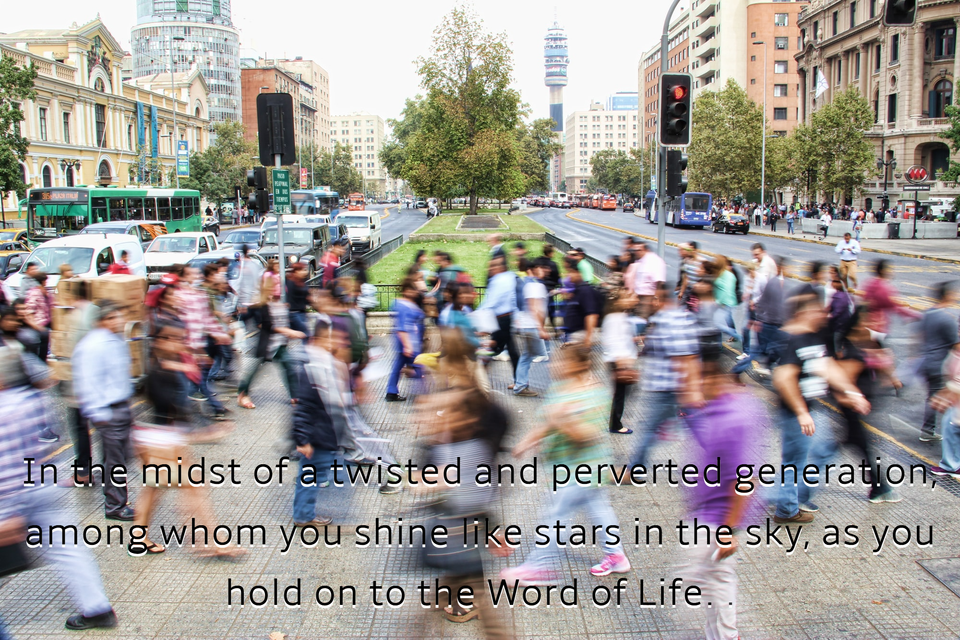
Do all matters without grumblings and disputings,
in order that you be blameless and faultless, children of Elohim without blemish in the midst of a crooked and perverse generation, among whom you shine as lights in the world,
holding on to the Word of life, for a boast to me in the day of Messiah, that I have not run in vain or laboured in vain.
Pilipiyim (Philippians) 2:14–16 — TS2009
This is not merely about “knowing verses.”
It’s about becoming lights—a people whose lives interpret Scripture correctly because they are actually living it.
The Remedy: Proclaim TORAH and Rebuild Disciples
If we want to halt the descent of biblical knowledge into oblivion, we must stop treating teaching as optional.
We must rebuild discipleship intentionally and live our lives intentionally.
Scripture itself tells us what it is for:
All Scripture is breathed out by Elohim and profitable for teaching, for reproof, for setting straight, for instruction in righteousness, that the man of Elohim might be fitted, equipped for every good work.
Timotiyos Bĕt (2 Timothy) 3:16–17 — TS2009
So when people say, “Doctrine divides,” my response is: bad doctrine divides. Truth does something else:
Truth sets straight.
Truth equips.
Truth forms a people.
And that’s why teaching still matters—even if the culture hates it, even if religious people resist it, and even if it costs us comfort.
Sound Teaching Will Become Unpopular—Scripture Already Warned Us
This moment we’re living in is not surprising to Y’hovah. He already told us what happens when people prefer desire over truth.
Proclaim the Word! Be urgent in season, out of season. Convict, warn, appeal, with all patience and teaching.
Timotiyos Bĕt (2 Timothy) 4:2 — TS2009
For there shall be a time when they shall not bear sound teaching, but according to their own desires, they shall heap up for themselves teachers tickling the ear, and they shall indeed turn their ears away from the truth, and be turned aside to myths.
Timotiyos Bĕt (2 Timothy) 4:3–4 — TS2009
If people won’t bear sound teaching, then the answer is not to stop teaching.
The answer is to stand on the Word, teach with more patience, more clarity, and more courage—so that those who still have some reverence for Elohim can hear and return.
Knowledge Is Not Optional—It’s Survival
The Tanakh is blunt about what happens when a people lose knowledge.
Meaning of the word Tanakh: Tanakh is an acronym for the Hebrew Bible, representing its three main sections: Torah (Law), Nevi'im (Prophets), and Ketuvim (Writings). It serves as the canonical collection of Hebrew scriptures in Judaism.
My people are destroyed for lack of knowledge;
Because thou hast rejected knowledge,
I will also reject thee, that thou shalt be no priest to Me;
Seeing thou hast forgotten the law of thy God,
I also will forget thy children.
Hoshea (Hosea) 4:6 — JPS 1917
That Word “law” there—within our framework—is not merely “religious rules.” It is TORAH: instruction, direction, covenant truth.
Rejecting knowledge is not an intellectual mistake. It’s spiritual rebellion that eventually becomes a generational collapse.
So yes—teaching still matters.
Not because we want to be “right.”
But because we want our children and congregations to be alive.
What Do We Do Now? A Practical Call to Talmidut (discipleship)
If we are to be the generation that halts this decline, we must return to simple—but serious—discipleship patterns:
- Daily Scripture intake (not occasional inspiration): reading TORAH as life.
- Contextual study (not clipped verses): letting Scripture interpret Scripture.
- Obedience-first faith: guarding what we learn.
- Home discipleship: talking of His words “when you sit… when you walk… when you lie down… when you rise up.”
- Community accountability: light shines best with other lights.
And we must ask ourselves one honest question: Am I living as a talmid of HaMashiach… or merely a consumer of religious content?
Because the world doesn’t need more content. It needs more set-apart people.
Closing: Why Teaching Still Matters
So yes—teaching a correct understanding of TORAH still matters.
It matters for the confused believer who wants truth but is drowning in noise.
It matters for the next generation being trained by media instead of Scripture.
It matters because HaMashiach commanded talmidut—not spiritual tourism.
It matters because the Scriptures are Elohim's tool for correcting, equipping, and forming a people who have emunah (faith) and do good works.
It matters because without knowledge, people are destroyed.
And it matters because in a crooked generation, we were never called to blend in.
We were called to shine.
Then I heard another voice out of heaven say: “My people, come out of her!" so that you will not share in her sins, so that you will not be infected by her plagues, for her sins are a sticky mass piled up to heaven, and God has remembered her crimes.
Ḥazon (Revelation) 18:4-5 (CJB)
By Rabbi Francisco Arbas
📧 franciscoarbas.yisrael@gmail.com
Following His ‘WAY’ — Netzari Mashiach Judaism

Comments ()